Polers, while most respect exotic dancers, spend a lot of effort making sure you know we are not strippers. (Well, except those of us who are. Well, no, actually, sometimes those of us who are too.) I clearly don't think that poling and stripping are the same thing, but sometimes I hear some arguments that make me go hmm. If you've ever said one of these things, think again.
"I'm not a stripper because I don't take my clothes off."
Lets talk about state laws for a second. "Gentlemen's clubs" in different areas might have various amounts of skin exposed for legal reasons. Some states you can run around in your birthday suit, some you can't bare anything, some it depends whether or not you're selling alcohol or what percentage of your square footage is devoted to adult entertainment.
The result of this legislation is that some joints that are "strip clubs" in every other sense do not have any nudity. They might be "go-go" or "bikini bars," where girls are dancing on stage and/or around a pole and/or on customers' laps have their naughty bits covered--top AND bottom.
Are you an exotic dancer if you're dancing onstage in a bikini? What if it's a thong bikini? What if it's opaque lingerie?
Some of you might be saying, "Oh, I can dance for money without taking my clothes off? Sign me up!" OK, but keep in mind that you might not just shimmy up and down a pole--you might still be expected to lap dance or do "champagne rooms." Does that change your feeling? Or is it still OK as long as you're wearing 2 inches of fabric? Is it OK to stuff your boobs in a stranger's face if as long as your nipples are covered?
Go-go bars aside, a lot of clubs are topless and not nudie bars (again, depends on state laws). Do you think it's OK to dance in a bikini but not if you take your top off? What if you're wearing pasties?
Oh, and consider the following: Nude beaches. Nude photos for a modeling career. Nude posing for paintings (I earned my grocery money doing this for awhile). Nude because you're in a culture (much of Europe) where nudity is culturally acceptable.
At the end of the day, it's only a few inches of fabric separating all of these different categories. Maybe 40 cents worth of cloth, retail. Where do you draw the line?
"I'm not a stripper because I don't perform in public."
I honestly think this is where the whole competition culture in pole came from. Women performing on a pole is naughty, but competing? That's different! Even though every single competition is also a performance.
You can make this argument if you're poling at home by yourself. Maybe if you're in class, although I'd argue that more people are "performing" to show off to their colleagues in class than will admit as such. But once you enter your first showcase or competition, you're performing.
"I'm not a stripper because I put on a show, I don't just wave my titties around."
OK, so you're a burlesque dancer because you swing your tassles in a trendy venue instead of an upscale gentlemen's club. What if you took your entire set, including 30's music, feathery costumes, and suggestive props, and transported them directly to a strip club? What if you performed your entire set, just as you would have in your hipster bar, but now it's in a tittie bar?
Actually, something like this does happen. There is such thing as a "feature dancer" in strip clubs. Certain women have a following and will travel all over the nation, dancing themed performances in fancy, burlesquey costumes to preselected songs with props, and then pose for photos with customers afterwards. These women don't just wave their bums back and forth for a song and collect dollars--they put on a real show.
Sound like a career path you'd like to follow? Well, you usually have to be a porn star to get this gig. So get out there and build up your resume!
"I'm not a stripper because I don't do it for money."
Oh, how nice for you--you are so rich that you get to pay to do something that another woman is doing to feed her kids. Whether or not you pole for money has less to do with your moral values and more to do with how badly you need money. If you're going to use the "money" defense to explain what's different between you and a stripper, consider that that difference has more to do with being born into a world (or marrying into a world or MAYBE bootstrapping your way into a world) where you were able to achieve financial security. Maybe a single bankruptcy separates you from them and maybe it doesn't. You might have parents you can move in with, or marketable skills that will get you another job. But unless you've looked into the eyes of your child, crying from hunger, and then turned down the money to nourish them in return for doing a little pole dance, I don't give you cred for this one.
I'm not saying that polers are exotic dancers, or that there's anything wrong with poling, or that there's anything wrong with exotic dancing. We all know the famous definition of porn, "I know it when I see it." And I've covered this issue before (see Pole, where is thy audience? and The precarious ties between pole dance and stripping). I'm as quick to differentiate my art from that of the pro exotic as the rest of the community. But I don't think it's a bad thing if we realize that the line between people who pole dance for fun, people who pole dance for profit, and people who do both, isn't a clean one.
Image from http://www.motifake.com/
Friday, November 29, 2013
Sunday, October 6, 2013
Why is everyone standing around holding the pole?
I've never been a regular student at a pole studio (circus, yes), but I like to do drop-ins here and there. It's fun because you get to see not only different combos, but different studio cultures. Some studios are more open or friendly, some are more cliquish; some feel like a gym, some feel like a spa; some are about competitions and some are about the cocktails that everyone goes out for after class. But everywhere I go, in almost every scenario--open pole, instructed class, pole jam--I see one thing in common: students standing around, holding the poles, and looking around the room.
Things I want to say to these people:
- Are you logging this as a workout?
- Didn't you pay money to be here?
- MOOOOVVVVE, DAMMIT!!!
And don't think I'm limiting this to pole. I have a hard time being a Patient Pippi at other aerial training when students are sharing apparatuses, and somebody's turn opens with an extensive prelude of holding the silks and staring up at the ceiling, "thinking." Forgive the vulgarity, but "shit or get off the pot!" People are waiting.
But that's how we let ourselves get away with it: we are "thinking." Unlike going to the gym and doing the same circuit workout three times a week, when we approach our apparatuses we DO have to think hard about what we're doing. We have to analyze, visualize, and galvanize ourselves into executing a scary drop. And we can benefit from watching our classmates work through the same moves.
Don't fall for it. Sure, you need to process, watch, and prep. But do so consciously, or else you're just stalling.
It reminds me of my days at conservatory. I hung out with, and often worked with, pianists. I remember them telling me how their teacher would scold them if they placed their fingers on the keys and then just sat there. Instead, they were instructed to do all their mental prep first, with their hands tucked away in their laps. Then, when they were ready, they could touch their instruments, in the tempo and feel of the music, breathing in time and ready to go.
You have to find that moment of quiet BEFORE you touch your instrument. Why? Because when you place your hands as if you're ready to start, it's easier not to notice that you're stalling. When you keep your hands to yourself, that moment of just sitting there, proverbially naked without your instrument to shield you, feels awkward unless your artistic soul is truly finding its expression. And because the way you approach your instrument--your piano, your pole--should be a part of the song.
If you catch yourself standing around holding your apparatus, your homework is twofold:
- Stop stalling. If you're thinking, think on purpose. If you're watching, watch on purpose. If you're not, get the hell upside-down.
- Let go. Find your inner music. And then reach out and go.
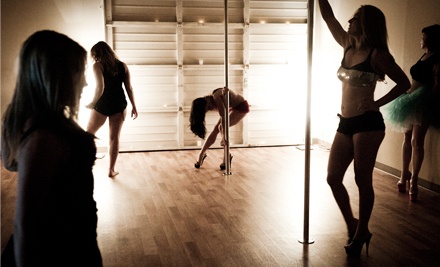
Image from groupon.com.
Saturday, September 7, 2013
The stigma of injury
I first dislocated my shoulder in 2004. The same year I started pole dancing, and as you can imagine, that's not a coincidence. It's also not the only time I dislocated it that year. It's one of those injuries that a) some people are naturally predisposed to, and b) recurs. And pole and aerial are just as dangerous for your shoulders as playing tackle football.
But these things happen, right? And while there was some carelessness on my part--I shouldn't have been doing 1-handed spins (I still don't teach them, even Reverse Grab), and certainly not throwing them as hard as I did. All athletes get injured from time to time, and pole and aerial are extreme sports. Playing baseball you can tear a rotator cuff; flipping 20 feet up in the air you can die.
I've always been very open about my injuries, partially because they can recur, and partially because I can help other people. I've talked SO many people through shoulder injuries, from subluxation to surgery (which I had in 2007). But on the flipside of that, I've felt a certain stigma that comes with having had aerial injuries.
I first noticed it at one of my first auditions to teach. I slayed at my audition for a fitness center, but didn't get hired. When I asked for feedback, the first thing out of the hiring manager's mouth was that he was concerned that I had been injured. I was taken aback. Almost every full-time athlete at my circus school had gone through some sort of injury. That's unfortunately something that happens when you push the limits of what the human body can do. Ask any Olympian.
Obviously, my teaching career went on just fine without the paranoid gym, but every once in awhile I'm reminded of the stigma of having been injured and "out" about it. It's ridiculous, but it's hardly a unique phenomenon. It reminds me of my former career as a singer. The worst thing that can happen to you as a singer is that you get nodes. If you get nodes, besides possibly never being able to sing professionally again, or needing surgery and vocal therapy, there is also the assumption, maybe by yourself, maybe by your colleagues and the fans, that you have Bad Technique. Everything you thought you knew is wrong. You are a Lifetime movie, a statistic, an example of what not to do. That might not be the case, but that's what everyone thinks.
If you've ever been seriously injured in the aerial arts--or, for teachers and studio owners, if you've ever had a student who was hurt on your watch--you've probably felt this stigma. So for everyone's sake, I want to set a few things straight.
Injuries are not necessarily caused by carelessness or *bad technique*
When you are pushing your body to the limits, anything can happen. You can be benching 300 lbs and your wrist can give out without warning. You can get distracted and lose your footing. You can throw a drop the same number of times you did yesterday, but today it's one time too many.
You can't predict everything that will go wrong.
Part of our job as teachers is to predict everything that could go wrong in a move. But you can't. People will always find new ways of hurting themselves. I once had a student cut her finger poling. I was like HOW DID YOU DO THAT, THERE ARE NO EDGES. And I've been told the way I fell out of a move was "not possible." I guess I just defied reality then. (Side note: I did break my leg in high school in a way that the doctor told me was impossible, and he insisted as much until I gave up and admitted I must have broken it some other way. In retrospect, my parents should have walked me out of that office. I don't think "empowered patients" were a thing in the 90's.)
Accidents are not always as cause-effect friendly as we want them to be.
I dislocated my shoulder 6 times over 3 years, and NONE of them was while I was doing something that you would expect to dislocate a shoulder. But there was often something I did not long before the incident that would have compromised the joint, such as spinning on one arm or stretching my shoulders too much in class the day before. I also have thrown my back out doing the stupidest shit--during periods when I was deadlifting heavy. (I mean weight deadlifting, not pole deadlifting.)
People can be predisposed to physical issues.
The funny thing is, my deadlift technique is polished. But I've also had back problems since I was 21. (True story: they mostly went away when I started poling.) And, as you've no doubt surmised by now, I naturally have loose shoulder joints that are predisposed to dislocation. (I've even subluxed my left shoulder a couple times, and that's after being crazy careful because of what happened with the right.) Just as you can have a propensity towards breast cancer or diabetes, you can have a propensity towards bad knees.
Sometimes we do have bad technique.
Let's not be overly-defensive here--some people do get injured because of one or more issues of poor technique or training methods. These can include:
- Not warming up sufficiently
- Overtraining (see Are you overtraining?)
- Stretching cold
- "Flailing," i.e. throwing movements without control (as opposed to effectively utilizing momentum; see In defense of momentum)
- Misinformation, such as being taught to throw your head back as you invert
- Weakness/under-engagement from one muscle group and the compensatory actions of others
Image from sheknows.com
Tuesday, July 30, 2013
Do you really want to teach?
There's a standard track that polers and other aerialists tend to follow. Sign up for classes. Take beginner classes. Take intermediate classes. Take advanced classes. Take instructor training. Teach classes. Maybe open a studio.
The track seems so natural, so almost automatic, that I wonder how many students stop and ask themselves if teaching is something they REALLY want to do, or if it just seems like the next logical step in their hobby/career. I mean, I'm a teacher on purpose--I decided early on that I was more interested in teaching than performing or competing. And I have something of a pedagogical background--I've been a private music instructor on and off (and took classes in that direction in college), and my first jobs after graduation were teaching ESL (which I am certified to do). So I knew what I was getting into, and made the decision deliberately. And there are others like me, of course. But there are many people who seem to fall into the business almost accidentally, and are surprised when it turns out to be more pain and less gain than they expected.
So before you shell out for a training program, ask yourself: "Why do I want to teach?" Because here are a few wake-up calls.
Because I want to finally make money on my passion instead of spending it!
A lot of teachers go into the business hoping to finally profit, but find themselves struggling to break even on their hobby. Sure, the studio will pay you for a class or two instead of you paying them, but for most of us the math doesn't add up. Even if you never had to pay for another class at your place of employment again, you'd still have workshops, grip aids, workout clothes (now that you're at the studio more, you need more outfits!), and any other community events, such as competitions or conventions, you want to attend. And keep in mind that teaching doesn't pay that well. I've been offered as low as $25 a class (for OVER an hour of teaching) even for advanced classes. Add in travel time, money spent on gas, and time spent outside of class prepping, and you'll find that few people are even recouping their expenses.
Because I'll get so much better at my craft when I'm a teacher!
It's true that there are some skills that will improve as you start teaching--mostly, your teaching skills. You'll find that when you have to teach something to someone, it makes you understand it better yourself. This comes in handy for things like breaking down new moves you want to teach yourself. However, it does NOT make you a better poler/aerialist overall. Almost without exception, every teacher I talk to complains that they spend all their time teaching and preparing to teach, and no time on their own art. Sure, teaching beginners to fireman multiple times a week will make your firemans REALLY solid. But your goal moves, your routines, your polishing and perfecting will likely be neglected.
Because I got skills and I should put them to use!
What sort of skills do you got? You can do a fonji and a Marion Amber and even know how to break them down into step-by-step instructions? That's great, but it's not going to help you when facing a roomful of students who can't hold up their own bodyweight. If you are an advanced poler or aerialist, you may be disappointed at how little you get to teach your advanced skills. The majority of your students are just not going to have the ability to do what you can do, and they still might not after years of classes. And when you DO have truly advanced students, hang onto your hats! They're going to want to learn the "flavor of the month" moves before you have time to master them.
Because I want to share my passion with others!
There are many ways to spread the love besides dragging yourself to another bachelorette party after an exhausting week at the day job. Convert. Evangelize. Get your friends INTO the classroom, then let someone else worry about what to do with them when they get there.
Because I think I have what it takes to be a great teacher.
You probably do. You probably have SOME of what it takes to be a great teacher. Almost everyone exhibits at least a few of the following: empathy, enthusiasm, the ability to break things down, the ability to put things together, challenging the top of the class, lifting up the bottom of the class, inventing new moves and combos, mastering existing moves and combos, spotting students with your body, spotting problems with your eyes, approaching a problem from multiple angles, accentuating the positive, drawing out individual potential, drawing out individual muscles.
If this grocery list of skills makes you feel inspired rather than overwhelmed, then maybe you DO have what it takes to be a great teacher.
So maybe teaching's not right for me. Now what?
I'm a musician, and I always find it funny when people say apologetically, "I have no musical skill whatsoever. I mean, I LOVE MUSIC! But I can't make it." My response is: GOOD! We need people like you! Musicians couldn't survive if someone didn't love what we did and made up the base audience (see Pole, where is thy audience?). Likewise, there is plenty of room in this industry for those who want to be the BEST THEY CAN BE by putting their energy into getting training, and for those who want to FUCKING HAVE FUN. Why do you have to interfere with those processes by throwing business into the mix?
And if you're still convinced that you want to teach, some final pearls of wisdom:
Teaching is EXHAUSTING.
Even if you're teaching moves that you mastered years ago, you'll find yourself wiped after that last schoolbell rings. Don't overextend yourself. Teaching a few classes in a row is normal, but don't assume you're going to be up for an intensive training session afterwards. I mean, if you are, god bless ya, but I feel like naptime after a single private.
Studios like to hire from their own flock.
Even small studios offer instructor training courses, so they basically groom their own students to take the reigns. That means self-teachers and other non-studio students, as well as newcomers from out of town, are on their own. Unless you have already made a big name for yourself, or you teach something different than what is locally offered (for example, if you're a poler who also teaches lyra, the local studios will probably eat that up), you might be too far outside of the clique to get a gig.
Your boss might be batshit crazy.
I don't know what it is about the pole/aerial arts that draws such personalities, but it's amazing how many pieces of work are out there running businesses. I mean, of course there are highly professional, sane people who own studios. But there are as many horror stories as there are instructors. No matter how OK a situation seems at a distance, decide ahead of time what kind of antics you will and will not put up with.
Teaching is awesome.
Despite all of the above, there are plenty of us. Why? Because we love it. We, the teachers, have sacrificed our weekends, our evenings, at times our day jobs, our own aerial ambitions--because the students make it worthwhile. If this sounds like you, by golly get in there and teach! And just as you want your students to be the best performers they can be, make yourself the best teacher you can be.
Image from everydaycareer.com.
Wednesday, July 10, 2013
Teachers teaching teachers
If you're an even moderately advanced pole instructor (less so for other aerialists), you're going to spend part of your teaching career instructing other instructors. Polers, at least advanced ones, are very goal-oriented, and if they think you can teach them something, they have no qualms with taking a class or a private with you. They don't care if you are both instructors, they don't care if they are advanced as you--they don't even care if you have a pulse, as long as you can help them reach their pole goals. And as dedicated polers tend to jump into instructor training quite soon after falling in love with our art (there are plenty of instructors who can't do even low-intermediate moves), there are plenty of instructors who will fill the ranks of an advanced class or workshop you may be teaching.
This willingness of us polers to go to each other for help and instruction is one of the things I think makes our community great. But at the same time, it can be awkward. Offering constructive criticism without bruising egos is a delicate wire to walk. As a teacher who has regularly taught classes, privates, and workshops to other teachers AND been on the receiving end of the instruction, I have my own philosopies that help me balance this, and since they seem to be working (they keep comin' back!), I thought I'd share them.
We can all learn something from each other. I keep saying this, but it bears repeating. No matter how advanced you are or how basic your instructor is, they can probably do something you can't, or do something better than you can, or just be able to use their instructor eagle-eye to spot ways to optimize your performance.
Just last week I dropped into a class with an instructor who basically only taught beginner-level spins (see Studio Review: Gypsy Rose Exotic and Pole Dancing). She still helped me with my reverse grab. Don't be a snob.
Avoid hierarchy like the plague. A poler who is clearly not as advanced as you can have a standard teacher-student relationship with you, but in many cases, the person you're teaching is just as advanced as you are. If they have come to you for instruction, they have shown their willingness to "submit" to your "superiority" for an hour or two. But that doesn't mean that their skills ARE inferior, or that, if they are, they want to feel belittled. Most instructors that I've taught can do things that I can't. It's respectful to approach them as equals who happen to be in your class, rather than as students looking up to you.
Don't offer criticism unless its asked for. Of course, if they are taking your class, that means they ARE asking for criticism. But if it's a situation where you encounter someone at a pole jam or watch a performance you think could have been improved, do not offer feedback unless the person asks for it, or at least seems genuinely interested in your opinion. I know you mean well, but egos are fragile and giving unsolicited instruction can give off an implied hierarchy vibe: "I'm the teacher here, you're the student."
Exceptions, of course, for if someone is doing something that could hurt them. Even then, tread carefully.
Respect that the student/instructor has their own opinions. A pure student-student will pretty much do anything you tell them (see The Stages of Learning), but an instructor has their own methodology worked out. While they are temporarily submitting to your authority, you should respect their preferences when possible. Instructors are more aware of their limitations and what works well on their bodies, because they are constantly sussing out these facts about their own students.
Don't let your student become the teacher. If you see your teacher-student do something amazing and you want to learn it, don't ask them to take away from their class time to teach it to you. Compliment them, and book a private lesson with them. Similarly, don't let a teacher-student in your class take over teaching the class. Of course they should help other students if the students ask, and you should let them demo moves for the class, but don't let them get carried away and hijack your class.
Don't use class time to gossip. Well, generally, don't gossip ever. But specifically, we are a small and drama-prone community, and you probably know the same people and institutions. If you must chatter, go out for drinks after class. Don't let their class time slip away because you're gabbing, and try not to let them get you off-subject. It's easier to talk to a friend (you) than to hoist one's body weight into the air. We are all in danger of stalling instead of sweating.
When the class is over, you are no longer the teacher. Refrain from trying to offer criticism and pointers after the fact. Don't be quick to refer to them as your "student" in front of other polers (especially not their own students!). The student-teacher relationship has ended, and you are now equals--and, if you handled things well, still friends.
Our community is as sensitive as it is beautiful. Take every opportunity to compliment your fellow teachers and to lift them up. We all benefit when we help each other--even moreso when we like each other.
Image from money.cnn.com
Friday, July 5, 2013
Studio Review: Gypsy Rose Exotic & Pole Dancing, Boston
There's an unassuming storefront on Boylston St, right off the Public Gardens, with an unassuming door and an unassuming foyer and a flag out front that unmistakably says "Gypsy Rose Pole Dance." I know it's been there for years, because I remember seeing it years ago, back when I lived in New York but used to come to Boston frequently to visit friends. Truth be told, Gypsy Rose wasn't at the top of my list of places to check out. I'm a tech-savvy girl and I Google things and their website is something of a hot mess. You can see for yourself, but let's just say it has a lot of personality (and a class called "Poultry in Motion"...?). It seemed to be mostly focused on bachelorette parties and otherwise on what we call "stripper style" pole, and those are not really my focus. But, I'm open-minded, so I thought it was finally time I give Gypsy Rose a try!
I struggled quite a bit with their mindbody site, but on the 3rd or 4th try was able to book a class called "Open Pole," although it was described not as an open workout but more of a small group class for non-beginners where rep is decided based on who's in class and what they want to learn. I figured I'd either get there and the company would be as much of a jumble as the website, or it would be some more serious polers who just needed a website redesign.
Coincidentally, the night before my class I got together with a poling buddy. She suggested going out to a bar and I protested that I had to wake up early the next morning to get to a pole class. She's a serious poler/aerialist, so when she asked what studio, I said "Oh, you've probably never heard of it--Gypsy Rose?" She laughed out loud. Turns out she used to teach there. Her input was simply "Wendy is crazy!" But she smiled when she said it and didn't seem to mean it in a bad way.
So I was ready for anything when I arrived for class on Sunday morning. Except the studio not being open; I wasn't quite ready for that. There was a sign up that said Gypsy Rose clients should take the elevator to the 3rd floor (there was a yoga studio on the 2nd), but the elevator wouldn't go to 3--like someone hadn't turned the key to unlock the floor. I tried to take the stairs, but the 3rd floor door was locked. I asked a friendly lady in the yoga studio on my way back down, and she said "They're probably not there yet."
So I sat on the floor in the foyer and watched all the yoga people come in and asked a few people if they were Wendy and they all said no. About half an hour in I was reading a boring business book when a passer-by asked, "Are you waiting for me?" Wendy apologized for being late, explaining that she'd had a 14-hour day the day/night before and had overslept. She came in with a student--I'm guessing they carpooled. (Not unheard of, as bad boy pole icon Philip Deal does occasionally pick me up from Salem to go to North Shore Pole Fitness. That shows how committed these instructors are to their students!)
Wendy was exactly like I expected from the website and the descriptions. She talked a million miles a minute, cracking jokes and just generally being a boisterous person. Since she talked so much, I can tell you a lot about her: Wendy is a proud ex-stripper, 42 years old, specializes in teaching beginners, likes to teach mostly spins, has been in this location for 6 years and in business for 10 making hers the first pole studio in New England, her studio is haunted... She asked a lot about me, too, and seemed intimidated when she found out how much experience I had, but I assured her that I was just there to have fun and she promised me she could deliver on that. :)
True to the website, this studio has a LOT of character. There is a door knocker shaped like big brass balls (yeah, like that). There are various sticks and other implements of torture in the corner that Wendy claims to use for punishment. And there is a costume closet.
Dressing up in outfits is not really my thing, but in restrospect I should have tried it to get the "full experience." Would have made for some nice photos! Oh, and they have thigh-high stripper boots which would have been nice to play in. I've never owned a pair because I am too cheap.
After getting changed, we went right into class, and Wendy checked with us that we could stay late because we had started late, and my classmate Sara and I said sure.
Then class started. As if the experience wasn't already so different from other pole studios, instead of starting with a warm-up, we started by sitting against the wall. Wendy put on some music, and she freestyled a song for us. She danced a whole stripper-style song right in front of us. I gotta say, girlfriend has some moves! She didn't do anything advanced, but what she did was spot-on and sexy. I know a lot of sexy-style pole dancers from the studio world who could really learn a thing or two from watching Wendy.
Then we got onto the poles. Warning: there is no warm-up in this class; as with many hour-long aerial classes I've taken you're expected to warm yourself up beforehand so as not to cut into instruction time. That's a good thing to know before you get there. Also, it was horribly muggy outside and the AC in the studio was blasting. This would have made it hard if we were doing more aerial-style pole (cold poles + cold bodies = impossible to stick to the pole), but since we were sticking with spins, it was fine. Doing spins on static pole when it's too grippy leads to pole burn.
Wendy had me run through every spin I knew, and even though I don't know a million spins for static pole, I was winded pretty fast--but she'd learned what she needed to. She correctly divined that I don't do a reverse grab spin. I have a good excuse: I categorically reject swinging on one arm because I think it's too hard on the shoulders. BUT, as long as I stay on my good shoulder it's fine in moderation, so I took the opportunity to have an expert spinner clean up my technique.
I always say this but it bears repeating: we can all learn from each other. Even though I'm an advanced poler and Wendy doesn't do advanced moves, she was able to help me with my spin.
My classmate, Sara, was doing as well as I was with the spin and had a solid aerial invert, which is something you don't always expect to see in an "exotic" style class.
Wendy used a variety of teaching techniques, such as drawing on the floor in chalk and holding her hand out for us to try to kick as we flung around. I get the impression that she teaches a limited number of moves, but the ones she does teach she has her pedagogy worked out to a T.
We spent pretty much the whole class working on this one spin, and then segueing another spin onto the end of it. I start to feel kinked up if I do a move/routine on just one side for a long time, but in this case I just can't do a reverse grab spin on my other side because of shoulder issues, so I went ahead and worked through it.
As it was getting to be the end of class, Wendy told us we could just work on whatever we wanted. She had another student coming in afterwards though, so after awhile she offered to move us to the other studio so we could keep practicing. I hadn't even known there was another studio! It was smaller, with just 3 poles (the main studio had 5 or so and was more spacious). I would have loved to stay and play, but I was suffering from some overtraining-induced pain from the day before because I can't take my own advice apparently (see Are you overtraining?), so I bailed. It was nice of her to let us stay and use the studio for free after class was over, though!
I was a kinda bummed that I got out too late to go shopping before I caught my train home. But even though I was doing pretty simple moves and wasn't aware of getting a workout, I left exhausted and starving, so I guess I was working pretty hard after all!
In summary, I've been to several different studios in my pole career, and Gypsy Rose was different from any of them. It's almost like a response from the universe to last week's post about authenticity. Yes, most of the pole community has moved on from its stripper roots, turning towards competition and aerial athleticism. But not everyone. There is still a faction. There is still someone like Wendy who considers her years in the adult industry a bragging right, who wants you to dress up in costumes and turn the lights down and laugh and just have fun.
Gypsy Rose is going through some major business changes. They've been bought out or something, or otherwise have a team of investors advising. They'll be moving to a new studio in Allston, and adding more fitness-based classes. I wonder how things will change. Will this tiny enclave of true stripper-style pole lose its character as it makes room for Zumba and corporate sponsors? Probably not if Wendy has anything to say about it.
STATS:
Gypsy Rose Exotic & Pole Dancing, Boston
Equipment: 1 pole room with 5 or more 50mm stainless steel (?) static poles, 1 pole room with 3 of the same. Not sure of make--I think my friend had mentioned they were X-Poles, but they don't have a spin mode.
Amenities: COSTUME CLOSET!! Bathroom in hallway, lounge/reception area, implements of torture.
Drop-in price: $25
NOTE: The studio will be moving to a new location and making major changes, so all of the above could be out of date by the time you go.
Photos of studio by me!
I struggled quite a bit with their mindbody site, but on the 3rd or 4th try was able to book a class called "Open Pole," although it was described not as an open workout but more of a small group class for non-beginners where rep is decided based on who's in class and what they want to learn. I figured I'd either get there and the company would be as much of a jumble as the website, or it would be some more serious polers who just needed a website redesign.
Coincidentally, the night before my class I got together with a poling buddy. She suggested going out to a bar and I protested that I had to wake up early the next morning to get to a pole class. She's a serious poler/aerialist, so when she asked what studio, I said "Oh, you've probably never heard of it--Gypsy Rose?" She laughed out loud. Turns out she used to teach there. Her input was simply "Wendy is crazy!" But she smiled when she said it and didn't seem to mean it in a bad way.
So I was ready for anything when I arrived for class on Sunday morning. Except the studio not being open; I wasn't quite ready for that. There was a sign up that said Gypsy Rose clients should take the elevator to the 3rd floor (there was a yoga studio on the 2nd), but the elevator wouldn't go to 3--like someone hadn't turned the key to unlock the floor. I tried to take the stairs, but the 3rd floor door was locked. I asked a friendly lady in the yoga studio on my way back down, and she said "They're probably not there yet."
So I sat on the floor in the foyer and watched all the yoga people come in and asked a few people if they were Wendy and they all said no. About half an hour in I was reading a boring business book when a passer-by asked, "Are you waiting for me?" Wendy apologized for being late, explaining that she'd had a 14-hour day the day/night before and had overslept. She came in with a student--I'm guessing they carpooled. (Not unheard of, as bad boy pole icon Philip Deal does occasionally pick me up from Salem to go to North Shore Pole Fitness. That shows how committed these instructors are to their students!)
Wendy was exactly like I expected from the website and the descriptions. She talked a million miles a minute, cracking jokes and just generally being a boisterous person. Since she talked so much, I can tell you a lot about her: Wendy is a proud ex-stripper, 42 years old, specializes in teaching beginners, likes to teach mostly spins, has been in this location for 6 years and in business for 10 making hers the first pole studio in New England, her studio is haunted... She asked a lot about me, too, and seemed intimidated when she found out how much experience I had, but I assured her that I was just there to have fun and she promised me she could deliver on that. :)
True to the website, this studio has a LOT of character. There is a door knocker shaped like big brass balls (yeah, like that). There are various sticks and other implements of torture in the corner that Wendy claims to use for punishment. And there is a costume closet.
Dressing up in outfits is not really my thing, but in restrospect I should have tried it to get the "full experience." Would have made for some nice photos! Oh, and they have thigh-high stripper boots which would have been nice to play in. I've never owned a pair because I am too cheap.
After getting changed, we went right into class, and Wendy checked with us that we could stay late because we had started late, and my classmate Sara and I said sure.
Then class started. As if the experience wasn't already so different from other pole studios, instead of starting with a warm-up, we started by sitting against the wall. Wendy put on some music, and she freestyled a song for us. She danced a whole stripper-style song right in front of us. I gotta say, girlfriend has some moves! She didn't do anything advanced, but what she did was spot-on and sexy. I know a lot of sexy-style pole dancers from the studio world who could really learn a thing or two from watching Wendy.
Then we got onto the poles. Warning: there is no warm-up in this class; as with many hour-long aerial classes I've taken you're expected to warm yourself up beforehand so as not to cut into instruction time. That's a good thing to know before you get there. Also, it was horribly muggy outside and the AC in the studio was blasting. This would have made it hard if we were doing more aerial-style pole (cold poles + cold bodies = impossible to stick to the pole), but since we were sticking with spins, it was fine. Doing spins on static pole when it's too grippy leads to pole burn.
Wendy had me run through every spin I knew, and even though I don't know a million spins for static pole, I was winded pretty fast--but she'd learned what she needed to. She correctly divined that I don't do a reverse grab spin. I have a good excuse: I categorically reject swinging on one arm because I think it's too hard on the shoulders. BUT, as long as I stay on my good shoulder it's fine in moderation, so I took the opportunity to have an expert spinner clean up my technique.
I always say this but it bears repeating: we can all learn from each other. Even though I'm an advanced poler and Wendy doesn't do advanced moves, she was able to help me with my spin.
My classmate, Sara, was doing as well as I was with the spin and had a solid aerial invert, which is something you don't always expect to see in an "exotic" style class.
Wendy used a variety of teaching techniques, such as drawing on the floor in chalk and holding her hand out for us to try to kick as we flung around. I get the impression that she teaches a limited number of moves, but the ones she does teach she has her pedagogy worked out to a T.
We spent pretty much the whole class working on this one spin, and then segueing another spin onto the end of it. I start to feel kinked up if I do a move/routine on just one side for a long time, but in this case I just can't do a reverse grab spin on my other side because of shoulder issues, so I went ahead and worked through it.
As it was getting to be the end of class, Wendy told us we could just work on whatever we wanted. She had another student coming in afterwards though, so after awhile she offered to move us to the other studio so we could keep practicing. I hadn't even known there was another studio! It was smaller, with just 3 poles (the main studio had 5 or so and was more spacious). I would have loved to stay and play, but I was suffering from some overtraining-induced pain from the day before because I can't take my own advice apparently (see Are you overtraining?), so I bailed. It was nice of her to let us stay and use the studio for free after class was over, though!
I was a kinda bummed that I got out too late to go shopping before I caught my train home. But even though I was doing pretty simple moves and wasn't aware of getting a workout, I left exhausted and starving, so I guess I was working pretty hard after all!
In summary, I've been to several different studios in my pole career, and Gypsy Rose was different from any of them. It's almost like a response from the universe to last week's post about authenticity. Yes, most of the pole community has moved on from its stripper roots, turning towards competition and aerial athleticism. But not everyone. There is still a faction. There is still someone like Wendy who considers her years in the adult industry a bragging right, who wants you to dress up in costumes and turn the lights down and laugh and just have fun.
Gypsy Rose is going through some major business changes. They've been bought out or something, or otherwise have a team of investors advising. They'll be moving to a new studio in Allston, and adding more fitness-based classes. I wonder how things will change. Will this tiny enclave of true stripper-style pole lose its character as it makes room for Zumba and corporate sponsors? Probably not if Wendy has anything to say about it.
STATS:
Gypsy Rose Exotic & Pole Dancing, Boston
Equipment: 1 pole room with 5 or more 50mm stainless steel (?) static poles, 1 pole room with 3 of the same. Not sure of make--I think my friend had mentioned they were X-Poles, but they don't have a spin mode.
Amenities: COSTUME CLOSET!! Bathroom in hallway, lounge/reception area, implements of torture.
Drop-in price: $25
NOTE: The studio will be moving to a new location and making major changes, so all of the above could be out of date by the time you go.
Photos of studio by me!
Sunday, June 23, 2013
Authenticity in pole (and circus)
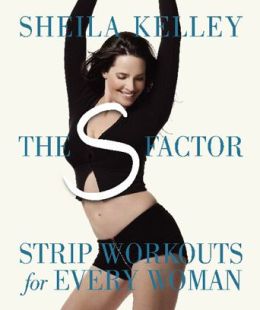
When I first started poling over 9 years ago, the art form was pretty attached to its exotic roots. Sheila Kelley wrote about learning to dance in a club and taught moves called "pelvic grind" and "hump." The first hardcore poling video, Pantera's Poletricks 101, had shots of the instructor unabashedly topless. Poles were 50mm and brass where affordable, because that was the standard in gentlemen's clubs. Dancing in shoes was the norm. Pole fitness classes prided themselves on having "real strippers" as instructors. Which made sense, after all--almost any industry wants its instructors to have real world experience in the field, especially full-time professional success. (See also The precarious ties between pole dance and stripping.)
But almost none of the women in those classes were trying to become exotic dancers, so why did we bind ourselves to their rules? Why did we need to use the same poles as they did, when our handymen could have installed any size and finish pole we wanted (back when it was normal for studios to have "homemade" poles, before mass-produced poles for the home became so popular). Why did people like me who trip over their own feet dance in 5 inch heels?
It was never about prepping for the "real world" of exotic dance. Rather, there was a sense of authenticity to the origins of the art form. A tango singer learns to sing in Spanish, even if it's not their first language, to be authentic. They would want ideally to study in Argentina or at least with an Argentinian teacher, in order to absorb the nuances of that authentic style. Likewise, a poler learned the vocabulary of the exotic dancer, and learned from the dancers themselves.
Today we still have a sense of authenticity, but the focus has shifted. Instead of using the clubs as our default concept, we use competitions. We learn on 45mm poles, both spinning and static, because those are the current norms for competitions. We dance barefoot most of the time. Our artistic role models have shifted from the house girl in the club to champions whose names and faces and signature moves we know. We want our instructors to be title holders, and beat down the doors to take workshops from them.
And likewise, most people taking these classes aren't prepping for world-class competition--most don't end up entering even regional competitions. Most pole students today don't aspire to careers as competitive polers any more than students yesterday aspired to careers as lap dancers. (Many want to try out a local comp or showcase, but in this analogy that's more the equivalent of doing an amateur night at the local tittie venue.) But we still have this sense of authenticity. We do things a certain way to conform to an unspoken set of external standards.
I don't decry this loyalty to a relatively arbitrary ideal. I think it's good to have some sort of baseline. It helps centralize the art, so we can have things like a shared vocabulary, safety standards, and the mobility to move from one studio, competition, or even country to another and still know generally what to expect. But I want to remind us on an individual level not to over-conform. If you're not prepping for competitions and you know a 50mm works better on your body, by all means buy that and train on it! If you dance better in heels, wear the damn heels!
I find it ironic that years ago we wanted strippers as instructors, and nowadays people look down on strippers as instructors--whether or not they have teaching skills. At the same time, we covet competition winners as instructors--whether or not they have teaching skills. Years ago we imitated moves like let splays and cat pounces--whether or not they suited our tastes and our bodies. Today we imitate moves like Allegras and iron X's--whether or not they suit our tastes and our bodies.
I'm less involved in other aerial arts these days so I can't say as much about their development in recent years, but I can say that when I was a student at Firefly/NYCAA, one of the first instructors was an old Russian man who had lived his life as a flyer in a traveling circus in Eastern Europe. Now that aerial acrobatics has been popularized to the point that hip young instructors are in no short supply and cirque nouveau is the norm, you see more people wanting to train with ex-Cirque du Soleil members and NECCA graduates than old school touring acts. As with pole, this has something to do with supply--there are more skilled polers (doing harder things) from outside the adult industry now, and there are more skilled aerialists (doing harder things) that didn't grow up on a circus train. But there is also a shifted sense of what is considered "the real deal."
If you wanted to be an exotic dancer 10 years ago, you had to get used to 50mm poles and dancing in shoes. If you want to be a competitor today, you have to master both spin and static, aerial and floor. If you don't? You don't have to force yourself. And you don't have to follow the masses to the latest "flavor of the month" move. It's nice to be authentic to the sanctioned standards, but it's most important to be true to yourself.
Image from BarnesandNoble.com
Subscribe to:
Posts (Atom)