Sunday, December 21, 2014

Studio Review: TSNY Boston


I've always known people who trained and/or taught at the unscalably-named Trapeze School of New York (which today exists in many cities, so it confuses people in Illinois when you tell them you're going to Trapeze School of New York in Chicago). I'd never been, partially because it's expensive and partially because they specialize in flying trapeze, which I've always declared I would never touch with a 20-foot pole. It's not a fear of heights or anything, I just have delicate shoulders that like to dislocate themselves and the dead hang used in trapeze is the worst thing I can do to them. But when I mentioned to one of my coworkers that I was an aerialist, she insisted that we try flying trapeze together.

TSNY Boston was locally famous for being located inside Jordan's Furniture in a North Shore suburb. Even people who knew nothing about circus knew about the trapeze school inside the furniture store. It would actually have been a very convenient location for me if I'd had a car, but I don't, so I never went. Just within the last few months, TSNY Boston has moved out of the furniture store and into a location right next to North Station, which is absolutely perfect for me--the train line I live and work on goes straight there!

I had sticker shock looking at the class prices--$50-60 plus a $20 registration fee--but luckily they had just started a LivingSocial deal, so we were able to get in for much less.

Here's what I was expecting the first class to be like: A lot of time warming up and doing practice exercises on the floor, practice some positions on a static trapeze, and towards the last half of class start trying simple swings from your hands or knees.

Here's what the first class was actually like: the teachers gave us some simple instructions on how to take off, they demo a sequence with multiple steps in it, and they say "Who's first?"

Fortunately we had some brave people so I was not first. I really wanted to watch the little routine a few more times before attempting it. Everyone in the class that day was a beginner (the joys of running a Living Social deal), and most people didn't get the sequence on the first try. But it's OK because you're in a harness being belayed by the instructors and the net you land into is insanely bouncy.

The routine was: Jump off, then tuck your legs in and hook your knees on the trapeze, then let go with your hands, then put your hands back on, then unhook your legs and straighten back out, then let go and fall into the net on your butt. The important thing was you had to do each thing exactly when the instructor said to do it, and they're yelling up commands while they're belaying you and the belay is making noise and the room is echoey and the instructors have accents so it can be hard to understand what they're yelling.

So um, it's really scary! And I'm not afraid of heights or anything, but you have to climb this giant foreboding ladder and then wait for them to hook you in, and there are so many things to remember, and the whole, like, "hey you're really high up, jump!" thing. I've never done skydiving or bungee jumping or anything like that.

The other thing we learned was kicking your legs back and forth to gain momentum to do a backflip off the trapeze. It was hard to get the timing of the kicking right, but the backflip itself was pretty easy (at least in the harness with the help from the belay).

So I got everything right, but after the first hour I was like, "OK I did it, mission accomplished, time to go home!" Except it's a 2-hour class. Except EXCEPT, as I was going up to do my 4th or 5th turn, one of the instructors did something to the rig and they examined it and determined they needed to work on it, so they cancelled the rest of class and had us reschedule. They said it was a totally abnormal thing to happen, and that the rig had been fine while we were using it so we were always safe, but I wasn't worried about it. Like I said, I was ready for a break anyways! And that meant we got to come back for free.

So my friend and I did come back a couple weeks later and I think I benefited from the time off in between, because it seemed easier and less scary the second time. We repeated the same sequences from the first class, and ended with a catch, which you can see in the video up top. Not bad for one and a half lessons, huh?

As for TSNY Boston's other classes, I don't know much. They had a trampoline class going on while we were there, but I never saw their other apparatuses out. I know they have silks and lyra and stuff. No pole, alas, but I'm not even sure where they'd put one considering how high the ceilings are. But anyways, there are tons of places in Boston where you can learn silks and lyra but not very many where you can learn flying trapeze. And this place was very well-organized--corporate, even--which I think is what you want when you are defying death. No brown M&Ms, right?

STATS:
TSNY Boston, Boston MA
Equipment: Flying trapeze rig, static trapeze to practice moves on, trampoline, other sundry aerial equipment that I did not see
Amenities: Large reception area with couches, merch, on-site photographer (you can purchase a flash drive of your photos), locker rooms
Drop-in price: $50-60 for a 2-hour flying trapeze class plus $20 1-time registration fee

Video (of me!) by Theresa Racicot

Saturday, December 20, 2014

Studio Review/Pippi goes climbing: Metrorock, Newburyport MA


This is kind of a studio/gym review and kind of a diary of going climbing for my first time. Like, it's my first time so I have nothing to compare it to, but I still thought you'd like to know about it!

There's a lot of people where I work on the North Shore of MA who go to this climbing gym in Newburyport. One of those people is a good friend of mine who started taking pole from me. So I agreed that since she tried pole, I should try climbing. Now that a series of performances, teaching engagements, and other physical activities are behind me, I finally made the trek up.

The gym is Metrorock Newburyport, and I'm lucky enough that my friend had a guess pass so I could get in free.

Metrorock Newburyport is conveniently located right next to the commuter rail, but I caught a ride with my friend. She warned me as we were getting out of the car that Saturday is a big birthday party day there, so the place might be swarming with children (ugh), but it looks like we just missed the party and it was pretty quiet.

Metrorock is in a huge warehouse-like space, which is an environment that will be familiar to many aerialists (more those that train in circus schools than those that train in pole studios, which tend to be smaller). The first thing that struck me was how colorful it was. The grips sticking out from the walls were color-coded, creating a kind of whimsical atmosphere.

My friend told me to wear yoga pants or leggings and layered tops since it can get cold, so I wore my Bad Kitty pants, SuperShag 2014 Competition tank top (I was a pole cleaner), and my awesome Intrigue Fitness hoodie that I can't believe is holding up considering how much I wear it. So I was all decked out in pole gear and pigtails, representing! I had to rent a pair of shoes from the counter, which were kind of like slim-fit sneakers. I found them perfectly comfortable (they make you get a size up from street shoe).

So my friend Judy walked me through some of the basics: some of the grippy things are good handholds and some are good footholds, worry about moving your feet before moving your hands, try to hang with your arms straight rather than flexing and wearing out your biceps.

The coolest thing is that the different courses you can do are color coded like hiking trails. Like, if you want to do an easy climb, follow the yellow; if you want to do a harder climb in the same area, follow the green. Each course was labeled with a level, although there were a few different numbering schemes (competition style and something else), so doing a 120 in one part of the room is easier than doing a 3 in another part.

We started with "bouldering," which is the lower walls that you do without a harness. I kind of assumed this whole thing would be really easy for me since I am an aerialist, but I started at the easiest course (a 50) just to get my bearings. IT WAS HARD! Your forearms get exhausted right away; it was like doing silks for the first time. It's totally not obvious figuring out where to put your hands and feet, and there's nothing holding you up except your tenuous grip on a red blob sticking out of the wall. And there's all this fancy footwork like hopping to replace one foot on a grip with your other foot, and pivoting against the wall. I made it to the top and back on my first try, but it was pretty exhausting and it was basically the bunny slope.
 Bouldering

My second course (I think it was a 70) was a little harder and took me two tries, but I did get complimented on my hoodie by a lady my friend knew. You never know how strangers are going to take pole dancing apparel!

So we did several paths, and I got most of them. There was one I bailed on just because one of the reaches was putting my shoulder in a compromised position.

After about an hour of that, Judy suggested trying the auto-belay, which is where you are in a harness and the line is controlled mechanically (as opposed to a person belaying you, which we weren't allowed to do because I didn't have the training). I was happy when she told me that bouldering was more difficult than belay, so we had already gotten the hard part out of the way.

I rented a harness. Putting it on reminded me of putting on Bodybinds; it was kind of a similar shape with a belt and garters.

Again, I did the easiest courses. It was a little easier with the belay, kind of like doing an assisted pull-up. I never really jumped down and let it take my full weight, which is probably something I should have tried and gotten used to.

I think I got through 2 paths successfully and bailed on the 3rd. My blood sugar was getting low and my hands were starting to hurt from the rough grips. (Again, kind of like your first silks class.) Overall we were climbing for an hour and a half, which I think is pretty respectable for a first try!

I can see how climbing appeals to thinking types. Like silks, there is a lot of strategizing and thinking ahead and trying to mentally picture how to make something work. Aside from it being really exhausting on the forearms, and definitely getting your heart rate up, I didn't feel like I was working my other muscle groups especially hard. My arms and legs were never tired and as of right now nothing is sore (my hands are a a little raw). I think it is something other aerialists should try, though, because it's a completely different way of using the exact same skills. Climb, keep your balance, calculate how to execute something, preferably in advance but maybe while hanging on by a pinky. Embrace heights. Scare your mom.

STATS:
Metrorock, Newburyport MA
Equipment: Bouldering walls, belay walls, auto-belay, I saw a chinup bar in the back... Shoes ($5) and harnesses ($3) for rent
Amenities: Bathrooms/locker rooms, reception area with merch and snacks, area to change shoes with storage cubbies
Drop-in rate: $20

Photos (of me!) by Judy Erkmann

Monday, August 11, 2014

Studio Review: Pole Haus, Philadelphia

Striking an Anastasia at Pole Haus Philly
For as often as I've been to Philly, I haven't poled a lot there. Most of the studios are in the suburbs and my schedule is usually so packed that even if I had a car it would be tough to find a class at my level during my free time. There was that time I went to Philly Premier Pole Studio (see Studio Review: Philly Premier Pole Studio), but I understand that place is sadly no more.

From the ashes has risen Pole Haus. I don't think it's the same ownership, but some of the instructors have migrated over, and they've taken Philly Premier's spot as the only pole studio right in Center City.

Fortunately schedules worked out and they had an open pole during my one free day, which was yesterday. I didn't get around to booking until I was already in Philly, and I hate trying to navigate MindBody sites on my phone, so I tried calling the number on the site to ask if I could just show up. No one picked up and I didn't leave a message because I didn't want them calling back when I was with the cast of the opera (which is what I was in Philly for). But they called back anyways and I accidentally blurted out "OH HI THIS IS PIPPI I WANT TO SEE ABOUT OPEN POLE TOMORROW" in front of the tenor who is a Catholic priest and the octagenarian pianist. Oops. But the owner said it would be fine.

Sunday I had the whole day off and after an insane brunch at Green Eggs (French toast so decadent you'd never believe it was vegan) and a little poking around at nearby Buffalo Exchange (I found a cute skirt for fall) I showed up early for class at Pole Haus so I could stretch and look around.
Yes, this is vegan.
The studio is no-frills, but not in a run-down kind of way like so many are. The space actually seemed more like a luxury condo, with large sunny windows and a nicely carpeted area to one side. There was no expensive sound system or lounge area with cushy chairs and pole magazines strewn about, but there were little cubbies for your shoes and a reception desk selling grip aids and tank tops. One thing they had that's an unusual feature was those wooden ladder-like bars that are used for stretching and stuff. I forget what they're called, but here's a picture from their website:
The studio owner, Jules, greeted me with a waiver when I walked in. I think she was taking part in the class that was finishing up, which was instructed by a woman named Jazzy. It was "Level 3," and the students were working on Jades and elbow stands while I was warming up over on the carpet.

There were only 2 other students for Pole Practice. I met a Tamara, who was working on inversions, and a Faye, who was working on some ambitious stuff like Fonjis and other drops. I mostly worked on stuff I don't have room in my apartment to do, like combos that require a little more height than my tiny apartment affords. We had some fun conversations and I demo'd some stuff and gave tips when asked about certain moves. (I tried to be helpful without taking over the class--always an awkward balance. See also Teachers Teaching Teachers.)

Open pole workouts have very different levels of instructor engagement from studio to studio. At some, the instructors walk around and offer suggestions. At others, they just hang back until they see someone who needs a spot or a technique tip. This class was pretty hands-off, as we had both the owner and an instructor watching over us but they let us do what we wanted without interfering. (Obviously I'm sure they would have jumped in if someone needed help!) I did specifically request and receive a spot on a tricky move I wanted to work on, which was helpful.

I didn't work out as hard as I sometimes do because I was a little overheated. The studio was air conditioned but I still ended up just being too warm and sweaty. I tried to follow my own advice as much as possible (see Bad Kitty: How to Pole when it's Too Damn Hot), and I found the air conditioning was strongest near the ceiling, so I took a few opportunities to pole-sit up there. But mostly I just had to take it easy.

Speaking of the ceiling, this place has nicer ceilings than most pole studios. Usually there's either a drop ceiling or a bunch of pipes and beams. This one had one pipe that was in the way of certain poles, but for the most part you could do a ceiling lay without too much maneuvering. That's actually pretty rare! And another fun fact about the ceiling that I wouldn't have known if I hadn't asked about the pole height: the ceiling is a little slanted, so the poles near the door are half a foot taller than the ones on the opposite wall.

My classmates bagged a little early, so I took some cool-down time to chat with Jules and buy a tank top. (I'm wearing it right now, it's cute!) We had a nice couple minutes getting to know each other and discussing everything from learning styles to bachelorette parties. I can't speak to the instruction since I didn't take an instructed class. But the space is cute, the people are nice, and the location can't be beat. Usually I hit a studio once just to get the flavor, but I could see myself going back here if I'm in Philly again.
Yes I held it long enough to get both shots. Ow.
STATS:
Pole Haus, Philadelphia
Equipment: 12 45mm chrome X-Poles, spinning-static convertible, 12-12.5'. Just one room, but 3 of the poles are over a carpeted area.
Amenities: In-studio bathroom (you don't have to walk into the hallway like at many places), reception desk, stretching bar-ladder thing, lots of yoga blocks, one crash mat
Drop-in price: $25, $10 for Pole Practice

Sunday, May 18, 2014

I'm a Bad Kitty Blogger

Hi followers,

Just a quick post to let you know I've been cheating on you. I am officially a blogger for Bad Kitty's website. See, I have a badge and everything:

The new Bad Kitty blog went live last month, and I've had three articles posted so far:
You can see the full list of my articles on the Posts by Pippi page. I crafted my next couple of submissions over the weekend, so there will be more there soon! Oh, and you can also see my blogger profile.

Anyways readers, I admit I've been cheating, I'm not sorry, and I don't want to break up. Let's make this 3-way happen.

Friday, May 9, 2014

Studio Review: Onyx Pole and Aerial, Sandy UT

For my second studio visit of my Utah-and-a-little-Idaho trip, I signed up for Pole 4.0 at Onyx in the suburb of Sandy. Or, I tried to sign up. The class was listed on their mindbody page, but the signup button wasn't enabled. I emailed them and the receptionist, Ashley, got back to me to let me know that they only start signups 2 days before class, but she would put me down. (That was helpful, because I wasn't bringing a laptop with me, and mindbody sites are difficult enough to navigate when you have a computer, let alone when you just have an iPad!)

So on my last day of vacation, I drove out to this industrial-looking strip mall in Sandy. This buliding has some interesting stuff going on! In addition to Onyx's pole and aerial studio. They neighbored an archery school, a fencing school, and... I forget, martial arts or something. You can really stay busy here! By the way, it's a little hard to find the school itself. You have to drive a spiral around a giant parking lot looking at buildings that look more or less unoccupied. But you'll know when you find it, and there's plenty of parking! (I love these spacious, non-urban places for that. I have no idea how to parallel park.)

I entered the studio and was faced with kind of an awkwardly small reception area with a closed door. Maybe they were trying to maintain the temperature of the space, or maybe they were trying to shield polers from peeping toms. But I introduced myself to the receptionist and she confirmed that I'd be taking class with at least one other student. She also showed me around a bit--bathrooms, changing area, and which pole area we'd be using. There are actually 2 separate pole areas here: a closed-off studio with 50mm poles and a row of 45mm poles on the main aerial floor.

The aerial space was filled with silks students on many fabrics. I also saw some students playing on lyras, and I assume there were trapezes--didn't really check, was concentrating on the 5 poles on the other side of the room.

Usually when spaces are "pole and aerial studios," you can tell they are a pole studio with some other apparatuses added as a bonus. You can tell because the ceilings are too low, the crash mats are too thin, the instructors don't have a solid background in circus arts--and circus spaces and pole spaces just feel different. Circus spaces are opener and dirtier and busier. Pole spaces are more contained, more controlled, and (ironically) have a more clean-cut presentation. Onyx felt more like a circus space to me, which is where I am in my element. Although I have way more experience and skill at pole than circus, I have way more formal training in a circus space than a pole space. (Although I will say that their crash mats seemed thin to me. A believe in cushioning!)

I got dressed (by this time the airline had delivered my luggage, unlike for my other studio visit--See Studio Review: La Bombe) in the dressing room. The dressing room was actually just a changing screen in an open room of cubbies (also common of circus studios). While putting my stuff away, another student walked in who I could just tell was my classmate. She had huge muscles--even bigger than mine! Her name was April and we spent some quality time chatting while waiting for class to start. She also showed me where I could buy a cute ponytail holder from the merch area (I usually keep some in my wallet but I was empty), pictured below.
Soon the instructor Heather showed up, who was very pretty and flexible. A third student joined as well, whose name I didn't catch but who was petite and adorable. (I don't mean that in a condescending way, she was just cute, like an anime schoolgirl!)

Warmup was brief and to the point: mostly leg-related stuff/jumping around to get our heart rates up. This is pretty much how I warm up my classes for pole conditioning, so it works for me.

The tricks were varied, but unfortunately they were mostly things I would never actually do: moves that require more flexibility than I have (a splits thing, Titanic, an Allegra combo--yeah I can Allegra, but it doesn't really look good if you can't do the splits) and things that irritate my wonky shoulders (Phoenix, a kicky-swingy thing in twisted grip). But there's not much you can do about that in a classroom setting, so I was a good camper and tried everything! The good news is that the moves were actually advanced. Like I've said before, you really never know what you're going to get in an "advanced" class from studio to studio. At one place I've taught, getting to the most advanced level means you can invert. At all. The other students were also legitimately advanced. You didn't feel like you were in a mixed-level class like can happen. (Then again there were only 3 of us, which makes that easier.)

We spent most of the class on static, but switched to spin as the class went on. As many instructors do, Heather had us end the class with improv to a song she put on. The fun part (besides poling and dancing of course) was that the silks classes were just finishing their warmups, so some of them sat and watched us and acted impressed. My ego appreciated it! (Especially because freestyling is where you realize how out of shape you are...)

We were working on that transition where you descend from a cupid to an inside leg hang (I had learned it at a pole jam in Boston) and I was feeling nice and grippy so I had April take a pic of my cupid in the studio:
The Q-sit pic at the top of the post was actually my resting position after the cupid. Q-sit is a nice resting pose! Oh, and it's hard to tell from the pic but the mural in the background says ONYX.

After class I went to the Red Rock Brewery. Crappy veggie burger, but, beer!

I felt like this studio had a really nice vibe. It was refreshing to be back in a real circus space, especially on my primary apparatus. I love doing silks too, but there's no place like home, and home is on the pole.

STATS:
Onyx Pole and Aerial, Sandy UT
Equipment: 5 45mm convertible chrome X-Poles ~12ft in main aerial space, 8 50mm chome Lil' Mynx poles ~8ft in separate pole room, several silks, lyras, etc.
Amenities: Cubby room with dressing screen, bathroom without showers, reception room, big merch section, lounge area
Drop-in Price: $5!!!!


Photos of studio by me, photos of me by April

Thursday, May 8, 2014

Facility Review: Lava Hot Springs, Idaho

My regular followers might recognize this story (see Facility Review: Dillons Russian Steam Batch): About a year ago I trekked out to Dillon's bath house in Chelsea and met a visitor from Idaho. I told her I wanted to visit Idaho when I went to Utah for commencement, what should I do there? She said without hesitation: "Go to the Lavas!" So I said, "OK, I will!"

Now, it shouldn't be a surprise that someone you meet at a spa suggests you to go a spa. But the sauna lady wasn't alone in her enthusiasm. On my first evening out in Salt Lake City, after my class at La Bombe (see Studio Review: La Bombe), I was enjoying a drop-dead amazing meal at the Red Iguana while being subjected to the conversation of a young set of double-daters at the next table. One of the young ladies was from Idaho, and as her date awkwardly tried to make conversation with her about that, one of the men blurted out "I LOVE LAVAS HOT SPRINGS!" and they all jumped in with "I KNOW! ME TOO!!" A good omen.

I finally made it to the Lavas a few days later, conveniently still sore from class at La Bombe and from hiking Bryce Canyon the day before. It was my first time in Idaho, and as I turned off the highway to approach the springs I saw little farms with horses outside and ACTUAL RED BARNS. I'm a city girl and finding out that scenes from my childhood Fischer-Price playsets and Richard Scarry books actually exist is a mindfuck.

I was confused going into the Lavas park. The first thing you see after the colorful welcoming arches is a large building with an indoor pool. I tried to go there to buy tickets/get visitor information, and the kind cashier was as confused as I was until he realized I was looking for the hot springs which was in a different part of the park. The Lavas also has the indoor pool and a rumoredly epic Olympic swimming pool (which hadn't opened for the summer yet).

Lava Hot Springs, ID is actually it's own town, and in addition to the pools it has a little downtown area of a few blocks lined with small hotels, restaurants and ice cream parlors, and a few gift shops. And at the end of the main street were the hot pools.

The hot springs were nothing stupendous to look at. There was a handful of pools partially covered by red tents. I guess I expected something called "the lavas" to be more naturey and less circusy.

My all-day pass was $9 and I rented a towel for something like $1.50. (Seriously, why am I going to bring a beach towel from Boston to Idaho.) The locker rooms were pretty bare-boned. There were curtained stalls where you could get dressed (particularly modest people in this part of the country I guess), an area with trough-style showers, and coin-operated lockers. Word to the wise, you only get to lock it once per 50 cent deposit, so don't plan on grabbing your phone out of your locker every 20 minutes!

The hot springs consist of a variety of pools at different temperature. A regular was explaining that the hottest pool, all the way on one side, is where the water comes up, and then it's circulated down to the other pools, which are gradually cooler as the water gets away from its source. She also said that the company sometimes adds (fresh spring) cold water to keep the pools at the correct temperature as needed. There were two smaller jacuzzi pools that were quite pleasant until I noticed a man giving himself an intimate massage with one of the water jets. However, I should point out that unlike most of the spas I've reviewed, this place is fully coed and fully non-naked, so I wouldn't expect any other funny business. (There were private and couples' massages as well though, so I can't speak to that!)

The crowd seemed to be largely Utah- and Idaho-based, with some foreign tourists and plenty of characters. The first people I saw were a couple of Japanese bikers, and there was a family of Native Americans who had previously lived in Alaska. Also, Idahoans have a lot of tattoos.

My one problem was that I had a pretty hefty sunburn from hiking Bryce Canyon the day before. The good news is that I had been wearing long jeans and 3/4 sleeves, so the sunburn was only on my face and forearms. But that meant I had to walk around keeping my arms out of the water, which was comfortable to awkward depending on the height difference between the underwater sitting steps and the edge of the pool. So my advice is to try not to get a sunburn before you go to a hot springs because OW.

I spent maybe an hour, 90 minutes hanging out in the pools, then got dressed and walked around the town a little, then back to the pools for another hour plus. And I have to say, my soreness ceased. My sore lats from poling and quads from hiking were all better as I drove back to Utah. Worth the $9 and the 2-hour drive.

STATS:
Lava Hot Springs, Idaho
Amenities: Multiple pools ranging from 102-110 F, locker rooms/showers, towel and swimsuit rental, massages available at extra cost, nearby indoor pool and Olympic pool (not included in hot springs admission)
Drop-in Price: $7-9 for an all-day adult pass

Photo by me

Wednesday, May 7, 2014

Studio Review: La Bombe, Salt Lake City

I went on an actual vacation! Long story short, I got my master's online and decided to show up to Utah State for commencement. It was mostly an excuse to go to Utah, because I'd never been and I get unreasonably excited about going new places, and because I love mountains. (I don't ski or anything, I just like to look at them!) My travel plans got switched around a bit, leaving me with some free time, so I decided to use it for pole, natch.

Some people (who don't know Charlee Shae Wagner) are surprised when I tell them they have pole in Utah. This is a crossroads of stereotypes: Utahans as Mormons, Mormons as prudes, and pole dancing as sexually explicit. There are actually many pole studios in the greater SLC area, and choosing would have been difficult if I wasn't so otherwise busy. There were only a couple options where a class at my level fit into my schedule, and I took both of them.

The first studio I visited was La Bombe in Salt Lake City proper. Judging by the name, you'd expect a sexy-centric boutique fitness studio, but that wasn't my experience. Rather, the studio was the more stripped-down, simple style--the kind of place where you know you're going to get a good workout. I arrived early and chatted with owner Amanda (who let me borrow her Dry Hands because my luggage was delayed, and a shout out to the Charlotte Russe shop at the mall for having cheap pole-able clothes!) while waiting for class to start. She showed me around the studio: there were 2 pole studios, one with 5 poles and the other with 6. (I think... My notes just say "11 poles"...) I also noticed that there were piles of 4-inch pole crash mats. That is so refreshing. I can't tell you how many studios I've been to that have no crash mats whatsoever.

I got dressed and started warning myself up a bit before the instructor Summer came in. I was disappointed that there weren't more people to meet, but a second student, Katie, showed up a bit later, and we made a happy trio of tricksters.

Summer's warmup was the first one I've ever taken that I 100% agree with. It was very joint mobility-centric (which is how I warm up myself and my students for tricks classes), with plenty to get the heart rate going. It got as sexy as "sexy pushups" but not as sexy as booty shaking. There was no static stretching. A little tribute to Marlo's Prancy Feet but no using up your strength on exhaustive abs routines before you even get into the air. And then there was some aerial style warmup climbs and inverts, plus a couple warmup tricks during which she was probably just feeling out my level (shoulder rollovers to kneeling, true grip handsprings).

The class was "pole playground" and advertised as multi-level, so I wasn't sure what to expect.  I definitely didn't expect what I got, which were a ton of crazy tricks I had never even seen, let alone attempted. I mean sure, we discussed some "basic advanced" stuff like Janeiros and Marion Ambers (stuff that's not easy but is common vocabulary), but there was a lot of stuff where I was just like, WHAT. And as much of it came from my fellow student as from the instructor.

It was more of a pole jam-style class, but still I tried to stay in "student mode" and not show off or try to start teaching (although I did demo my flippy thing from that last routine I did). I think it's healthy for instructors to stand back and allow themselves to be taught sometimes (see Teachers Teaching Teachers). And of course Summer and Katie had plenty to teach me, so it's not like I was playing dumb.

I wish I could tell you what we worked on, but I don't know the names of most of the moves, if they even have names. I did have them take this video of my shoulder invert-hand on the ground switch so I could see if I was doing it pretty. (This move I think I had seen a video of before but I don't think I had played with it.)
Yeah yeah I know, point your toes. I'm going to give up on my right foot. I'm quite pigeon-toed on that side so it always ends up looking sickled or flexed or some combination.

The class was only an hour, but we hung out tricking and chatting for an extra hour on top of that. Now that's the sign of a dedicated pole community! All in all the experience was humbling. Normally I'm a big city girl and I feel like I'm heading into the sticks when I leave home, so to find that level of polery in an area that seems so remote to me is surprising and uplifting. And again, like making yourself be a student, it's ego-dashing. It's so easy for polers in their home clubs and regional scenes to feel like big fish. But remember that a fish can't see where the big ponds are. They might be an ocean, or they might be a Great Salt Lake.

STATS:
La Bombe, Salt Lake City
Equipment: 11 45mm chrome X-Poles, about 12 feet high. Divided into 2 studios.
Amenities: Reception area with stuff for sale, lots of crash mats, bathroom without showers
Drop-in Price: $13 for the first class (I think $18 after that)

Sunday, March 2, 2014

10 years in pole: a retrospective and a routine


A goth bar in a red light district. An opera in a converted bathhouse. My journey to pole and the aerial arts has been a strange one. But 10 years ago, they were such rare art forms that strange was the only way to go.

There was S-Factor; I didn't live near a studio when I started out but I had the book. Still got it. There was the Pantera video. I got that too.

Pole was pretty much always sexy back then. Lingerie and stripper heels were all a part of the authenticity (see Authenticity in Pole). Chinese pole was a thing, but obscure. It is still obscure today, but less so because circus arts as a whole are less obscure. Otherwise it was always sexy. So different from today, where there are more flavors, but you can't have a personal preference without it being political and polarized. Sigh... I do like the variety, though.

When I started, inverting was like WHOAH. It was pretty much the hardest thing you could do. People have been really creative and talented over the last decade.

When I started silks, there were like 5 of us sitting on a cold, dirty floor in Brooklyn. That was one of the only places you could learn. One class a night. Now there are multiple circus schools in any decent-sized city, with packed class schedules.

How do I feel about the increase in popularity for these sports? Oddly, oppositely. For pole, I'm glad it's become so widespread, because it makes it more socially acceptable. It used to be something you couldn't talk about in polite company. It's still awkward because so many people still don't know better, but I don't have a problem mentioning it to people at work. For circus, I'm a little jaded about the popularity, much the same way you'd feel if your favorite band got really huge. Like, I had that shit on vinyl.

I don't remember why I remember that my introduction to pole was in February. I must have had Mardi Gras off work or something. But I've always marked late February as my anniversary. Last weekend I was getting ready to perform at the Sweet Escape pole dance revue and I realized it was late February, 10 years after I first fell in with a bad crowd who taught me to pole dance. I don't perform very much, so it was a good way to celebrate my pole anniversary. Hope you enjoy my routine, which I wrote for my workshop at Pole Chicks (see Studio Review: Pole Chicks, Rockford IL): it's all the moves I was teaching that day in one routine! A couple moves were wobbly when I performed it for the workshop, so I was happy to have a chance to redo it. This one went much better, though the pole didn't spin very well.

It's been 10 years. I've almost quit a few times. I've suffered injuries and other setbacks. I've had periods where I can't teach for awhile. But somehow I'm still going, even though I have no reason to. My only explanation is that I really love this. I don't want pole to be my life, like it is for so many people. But I don't see leaving it behind anytime soon. It just makes me happy.

Thursday, January 9, 2014

Drop it like it's hot (where "it" is you and damn straight it's hot)


Drops freak the fuck out of people, including me. Even though I've done aerial silks for 7 years, I still make an instructor or classmate count "3 2 1" before I let go. Besides the fact that we're (understandably) innately loathe to willingly let ourselves fall, there's so much that can actually go wrong. You can miss your landing by a little or a lot, kick or hit something/someone that's a little too close,  incorrectly estimate the amount of height you need, land too hard and get whiplash or strain something... well, before I scare you off, let me stop talking about what can go wrong and give you some tips on how to make it go right.

Land on your good side
Flips and drops are transitions. You're dramatically going from a starting pose to a finishing pose.  Most students tackle a new drop by going into the starting position on the side they're most comfortable with. But what you should actually be thinking about is the side you're going to land on.

For example, say you want to fonji, and you're a righty. Your good shoulder inversion side is probably your right side. Your good brass monkey side is probably your right side, too. The problem is that in a fonji, you start and end on opposite sides of your body. The tendency of most students in this case is to start from their right side out of habit, and just hope for the best. Not smart! You have all the time in the world to set up your starting position, but only a split second to set up your landing position. That means your end pose has to be automatic, kinosthetically memorized. So work up your left shoulder inversion until you're ready to try it from there.

Don't forget to let go
The hardest part of dropping is letting go, especially with your hands. So some students attempt to skip that part. You can't skip that part. You will hurt yourself.

When I teach pole drops that involve letting go with your hands, I start by having students drill straight-up repels: just go into a shoulder inversion and spring off the pole onto the floor. (There are many variations, depending on what you're learning--and it's a cool move in and of itself if you can do it gracefully!) I don't want anybody trying to flip until they feel safe letting go.

There's a middle part, too
When first learning a drop, we tend to think of it as "point A, point B." Go from the start pose to the end pose. That's not dropping, that's teleporting. What we really care about in a drop or flip is the journey.

Sometimes this is mechanical--hit a star pose as you throw your side rotational drop in silks--and sometimes it's stylistic--sweep your outside leg dramatically as you're doing a shoulder inversion flip. But don't forget that what happens in between the point A and point B is the meat (or tofu) of the sandwich.

Who the hell are you trying to impress, anyways?
There are some really amazing drops out there. People are bouncing around all over the place, trying to make us shit ourselves by making it look like they're about to die. And it's awesome. But it's also dangerous. When you see a crazy flip and feel pressured to learn it, ask yourself: who the hell are you trying to impress, anyways? Is risking your neck worth impressing a couple other advanced polers? Is it worth getting like 200 hits on YouTube? 'Cause seriously, that what it comes down to--only a few people will know the difference. The general public won't think the flavor-of-the-month trick is any more impressive than an inverted crucifix nose dive. And you can put together gorgeous and dramatic routines without any flips or drops at all. So by all means do them if you want to. But don't feel like you have to, either.

Picture from http://es.tcktcktck.org/

Sunday, December 29, 2013

Should you get a (bottle of) grip?


Grip aid preferences are one of the most popular topics for polers (right after what brand pole to buy and before what material pole to buy). Other aerialists tend to be rosin or nothin', though whether they use rock rosin or spray is also a subject of discussion. Grip aids are interesting to trade notes about, because everyone has a preference. Some swear by Mighty Grip, others like Dew Point, some love iTac and some hate it. My favorite are the grip aid "cocktails" I hear people come up with: "I layer on Dew Point and then cover with iTac on my legs plus Dry Hands on my hands and shoulders, and Cramer's on the bottom of my feet if I'm going to attempt a Starfish!" It's like bros in the gym describing their supplement stacks. "Bro, I take casein protein before and 30 grams of whey after, and 4 times a day I take a stack of creatine, caffeine, and alpha-lipoic acid, bro."

But I know many aerialists who have sworn off rosin and suggest that you do, too. Relying on grip aid can create lazy fingers and prevent you from building up the strength you need to master your art. (See also How to stick to the pole.) So should you torture yourself to build up your grip, or should you even the playing field by using as much grip aid as everyone else?

As much as many people like to be dogmatic about this, there's no cut-and-dry answer. It depends on the individual. Here are some questions to ask yourself:

What are your goals?
Are you training for a career in the circus? To win competitions? Consider stepping away from the bottle. You need to be secure in your poses in ANY conditions--hot or cold, dry or humid, fresh or exhausted.

Are you working out in your apartment for fun? Then why torture yourself? If you're going to have an enjoyable training session with grip or a frustrating one without it, you don't have a good reason to make yourself miserable. You're doing this because you love it, so you should enjoy yourself.

What are you doing?
If you're running your competition routine for the 40th time, now's a good time to go grip-naked. You've got the moves, now you need to intensify your training. It's like putting on ankle weights--you don't need them every day, but when it's competition training time you gotta give 110%. (Note: you do want to practice under performance circumstances as well, so it's also important to do some runs using exactly what grip aids you plan to use during performance.)

If you're trying out a scary new move and are afraid of falling on your head, grip away. Above all if you are actually above all: getting on a 20-foot pole for the first time? Use whatever you want! You don't want to look down, get nervous, start sweating, and slip to your death.

What is your skin chemistry like?
I agree that there are circumstances where using your skin alone are ideal, but I also hate when people get preachy and judgy about it. Why? Because they haven't walked a mile in your skin. An aerialist who has a cooperative skin chemistry scolding one who has to use rosin without understanding their skin chemistry is like a skinny person scolding a fat person for eating too much without understanding their metabolism. I don't sweat a whole lot. Lucky for me and my dainty femininity. I have friends who break out in sweatballs like Texas hail the second their heart rate goes up. It's not fair for me to tell them not to use grip aid. On the other hand, Pippi at 34 has really dry legs, but Pippi at 29 had no problem with knee holds in any weather. As a result, I am much more likely to use grip aids now because getting older sucks.

What is the weather like?
I live in Massachusetts and it's December and my apartment is cold. Maybe if poling were my full-time job, I would have the time/patience to warm up my pole in front of the space heater, warm up my body with vigorous calisthenics, get the pole all hot and bothered with some friction-inducing climbs and drops, and eventually I'd be able to pole comfortably. But I don't have time for that. (See Training when you don't have enough time.) I have to cook dinner and practice music and write this blog! I'd really rather just put on some rosin than slide out of every move for the first 20 minutes of my 30-minute practice session.

The summer is a different story. Poling in the summer is so exciting because everything is so easy! Until it's like 100 degrees and the air conditioner window unit isn't cutting it anymore. It's a delicate balance.

What's your budget?
Sport-specific grip aids tend to be $10+ per bottle, so if you go through it fast the cost adds up. If I'm honest, probably the reason I'm so stingy with using grip aids is more because I'm a cheap bastard than because I'm being a hardcore aerialist.

Of course, there are budget, DIY alternatives. I like to use Corn Husker's Lotion because I can get it at CVS for like $4. Some people use shaving cream or even hairspray (thanks for the tip Peita!). But the cheapest option is nothing.

Photo by me. Please disregard bottle of wine in the background.

Thursday, December 12, 2013

Treatment of minor pole & aerial injuries


No matter how safe you are, the aerial arts hurt. Injuries, large or small, are inevitable for the air-bound athlete (see The stigma of injury.) Some are career-ending, even life-ending. Others are annoying. If you dislocate your shoulder or break a fibula, see your doctor. But for your everyday bumps and bruises, here are some handy tools that will get you back off your feet and back into the air.

(Disclaimer: I'm not a doctor, I'm not a nurse, take any of the following advice at your own risk.)

Pole/fabric burn: A+D Ointment
One of the first things you learn in pole is that pole burn is a thing (see Your first pole class.) The same is true for silks, rope, and other instruments of torture. Apparatus burn can keep you off your apparatus as you wait for it to heal.

Fortunately, during a particularly bad inner thighs burn a few years ago (you know the one polers--where you wear bike shorts under your skirt so your thighs don't rub together because OW) I had some A+D Ointment around due to a tattoo, and decided to give it a try. Problem solved. I can apply after training and get back on the pole the next day. Now, don't overdo things--and yes it is possible to get a more serious burn that will need more care (I fell out of silks in Berlin and had fabric burn that kept me in bandages for a month). But for your everyday pole burn, this trick should keep you going.

Blisters: Liquid Bandage
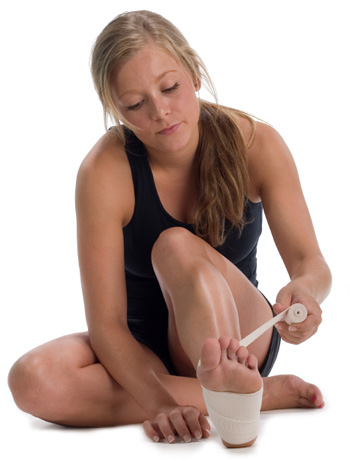
Blisters aren't one of the first problems that polers have (nor silks, though I can't speak to other apparatuses), but overtraining can bring them on, and then it hurts to touch things, which is not useful for training. A lot of people will soften the blisters by rubbing oils into them--but then your skin goes back to being weak and fleshy and the blisters will come right back.

When I first got my own set of silks, I really overdid the training, and after a few days my blisters were so bad that I could hardly hold the fabrics. Fortunately, my former teacher tipped me off to liquid bandage, and a CVS pharmacist confirmed that it would be my best option if I wanted to keep training in the near future. I painted that magic stuff over my lumps and I was back in the air the next day.

I covered all of this in Blisters: Soften or Toughen, but it bears repeating. If you want soft, touchable skin (and there's nothing wrong with that!!), oil away. If you want intense athletic training, don't.

Pulled muscles: KT Tape
I've always had neck problems. I remember at 8 years old waking up with a stiff neck and not being able to turn my head to the right. So when I threw my neck out a year and a half ago, it was nothing new. But it was worse than ever before, and I had performances and a workshop coming up, so something needed to be done. I had heard of KT Tape and tracked down a package at a local luxury gym. It was really complicated to apply--following the instructional videos, my mom wasn't getting it right and my dad had to take over. But once it was on? Night and day. All of a sudden I could move, I could breathe, I could hold my head up high, I could look around!

With KT Tape I was able to go back to training and complete all my commitments. And I know how well it worked, because at one point I thought I was better so I took it off. I was instantly in pain again and begged to be taped back up immediately. And then I was and I felt fine. Day and night.

Sore muscles: Epsom salts
You know what I like about hot baths? So many things that are healthy for us--exercising, dieting, waking up early--can be so unappealing. Not so for hot baths! You can relax with some bubbles and the radio and maybe some candles and a class of red wine if you're feeling fancy (and why the hell not? live it up a little!). Just make sure you add a scoop of epsom salts to the water and you'll be relieving your sore muscles as well. This is a popular treatment among aerialists and athletes of all varieties.

This one is hard to judge objectively. How do you know the extent to which the salts are helping? Maybe if your calves were sore and you soaked one in a big tub of epsom-salted water and the other in regular water? But subjectively, I do tend to feel better after one of these delightful restoration baths.

Bruises: Arnica
Even non-athletes swear by arnica oil for bruises. We all bump our shins on the coffee table sometimes! I use it and subjectively I think it works. But again, it's hard to test. You'd have to have identical bruises on both sides of your body and then just arnica up one of them. But anyways, a little bit of gel goes a long way, so it's not like using it is a huge investment.

I usually use gel, but I sometimes like to douse myself with Weleda Arnica Massage Oil after training. That's mostly just because it smells so good, though.

Most things: Ice
After 10 years of pole and aerial, I can tell you that the vast majority of injuries I've given myself, small or large, benefit from icing. Ice reduces swelling, and swelling is the body's response to lots of injuries, so it's usually the first place to go.

Icing yourself can be a pain. Do yourself a favor and invest in reusable, anatomy-specific ice packs. If you hurt your knee, buy a knee ice pack. If you hurt your neck, buy a neck one. Yes, your freezer will be more first aid than ice cream, but if you don't make it easy on yourself you're not going to do it. And you'll probably end up needing it again. Keep the 80/20 rule in mind: 80% of your injuries will probably be to the same 20% of your body. (Or, for an alternative, see my mom's idea.)

Everything: Rest
You are probably here because you are overzealous about training. (See Are you overtraining?) You hurt yourself (everyone does), and you want a shortcut so you don't have to wait for it to heal before you start training again. OK, I gave you the shortcuts. But we all know that there are no real shortcuts in life. You need to rest. Lay off a little bit. Don't expect to jump back in at full force, no matter what potions you're using. You'll only make it worse. Think long-term about your training--and your life. It's not worth really hurting yourself to get back to training a couple days sooner.

Photo by me!

Sunday, December 8, 2013

Your first pole class


Going to your first pole dancing class can be intimidating. You might be confused about what to expect, what to wear, and what the workout actually consists of. Maybe you are trying pole as part of a Groupon or Living Social deal. Maybe you'll be attending a pole dancing bachelorette party. Or, maybe you're an experienced poler (self-taught, learned from friends, or "on the job" in the case of exotic dancers) who's never been to a pole studio, but wants to give it a try. Well, consider me the Welcome Wagon. Here's an introduction on what to expect at your first pole class.

Finding a studio and signing up for a class
Unless you found a studio by driving by one in your town or joining a Groupon deal, you probably started by googling for pole dancing classes in your area. You probably came across a studio's website (or maybe many studios), maybe read some Yelp reviews or even a review on this site. Some areas are glutted with pole studios and some have no options for miles around. It makes sense if you think about it: pole is a hobby that becomes obsessive quickly, so pole studios tend to multiply as students take class, get hooked, train to become instructors, and open their own studios nearby.

Most pole, aerial, and yoga studio websites use an online class sign-up site called MindBody. So the look-and-feel of the signup pages may be familiar from site to site, but unfortunately a lot of administrators have a really hard time configuring MindBody in a way that makes sense. You might have problems such as not knowing which tab to click on to get the class you want, not being able to find out how much a class costs until you create a login, and differing schedules on the studio's web pages vs. the studio's signup site. Hopefully you end up on a site that is well-organized and can sign up for class without too much of a headache.

What to bring and wear
The first question most newbies have is, "what should I wear?" It's actually pretty tricky to dress for pole. You need enough skin exposed so your skin can grip the pole, but you need to be covered enough that you don't have any wardrobe malfunctions. Even something that seems reasonable on the ground, like shorts, can look very different when you're upside-down (and everyone can see up your shorts legs).

The standard uniform for experienced polers is: tight-fitting "booty" or "boy" shorts, a sports bra, and a tank top layered over the sports bra (you might want to take the tank to off to have more skin to grip with, so don't plan on wearing one of those that are a tank top with a sports bra built-in). However, at your first class you probably won't do moves that require as much skin grip, so you're probably fine in long pants. Think "yoga wear."

Some studios allow/encourage students to dance in "stripper heels," but barefoot is the norm.

You also want to bring a water bottle. Some studios make you bring your own yoga mat, but that's rare, so if it's not specified on the website don't worry about it. I like to bring a little snack (power bar or something) for classes that are over an hour so I don't get "hangry." Finally, experienced polers will bring some kind of grip aid, but if it's your first class you probably don't have any grip aid yet. They will probably sell some at the reception desk and/or have some you can use in the studio.

Arriving at the studio
Plan to arrive at the studio plenty early on your first day, to leave time for finding it (some of them can be really hard to find), signing waivers, getting dressed, and just having time to look around and chat. Parking might also be an issue in some areas.

Size, layout, and amenities vary drastically from studio to studio. You may be in a cushy lounge area, or you may be in a single pole room. This largely depends on how much money the studio has. But don't be put off if you end up in a single, unimpressive room--it often means that the owners are more interested in the art of pole than in making money, so you might get better training in the end.

Most studios have a reception desk that may or may not be manned. If it's not, someone will wander out and see you waiting to be helped eventually. The first thing they will do after meeting you is give you a waiver to sign. It's a pretty typical legal form that says they're not responsible if you injure yourself. Don't be alarmed, every studio has this. (But yes, pole dancing is dangerous and you can hurt yourself. Be careful!)

Of course, not all pole classes are in a pole studio per se. Some may be in a gym or a dance studio. Oh, and keep in mind that policies on men taking class vary from studio to studio as well. If it's going to be too creepy for you to train alongside dudes, check on the studio's policy first.

Getting dressed
Bigger pole studios will have locker rooms and even showers. Smaller ones might just have a bathroom that has to be shared among the students. That means you need to arrive early enough to get dressed and wait in line for the bathroom. Alternatively you could just show up dressed already, depending on where you're coming from.

Waiting for class
Depending on the layout of the studio, there might be a lounge area to wait in. Or maybe you are in the pole room, trying to stay out of the way of the class before you.

It's possible that some friendly student will introduce themselves to you, but don't feel bad if they don't. Pole studios can be a little cliquish. However, we polers are REALLY excited to introduce new people to our art, so if you tell people it's your first time they'll probably be really happy to talk to you about it and tell you how much you're going to love it.

If it's a "teaser" or "taster" class, you'll be there with a lot of other newcomers. Some of them will be pretty nervous and chatty, so it's easy to make friends. :)

On the other hand, maybe you're there with a bachelorette party. There could be a regular class before yours, or there could be another bachelorette party. Either way it's nice if you can get a peek at what's going on so you know what to expect (and see all the smiling sweaty people having fun).

Start and warmup
Once it's time to start, everyone will pick a pole. It's up to you whether you want to be in front where you can see the teacher best or in back where you don't feel like everybody's watching you. Also, in some studios the poles aren't all the same--they might be different diameters, and some might be set to spin mode and some to static. But it doesn't matter much on your first day.

The norm is one student per pole, but some crowded classes will have 2 or 3 students sharing a pole. Many studios have an across-the-board "one student per pole" policy, though, and won't let the class get overbooked.

You'll probably find a place against the wall to stash your stuff and the teacher will warm you up. A warmup often includes stretching and/or conditioning (usually a lot of situp-like exercises). If it's a more "sexy" style pole class, there may be some "booty popping" in there as well.

Class
Then you get to the meat of class. The teacher will demonstrate and explain something, and then you'll try it a few times.

And the first thing that will happen is you'll bang your shin on the pole and yell "OW!!" Congratulations, you've earned your first merit badge: your first pole bruise! Expect your legs to look "like moldy bread" the next day, as one aerialist colorfully put it to me after her first lesson. Yes, the bruising subsides over time. Most of us only get bruises when we're learning a new move. Right now, all the moves are new for you, so you have a lot of merit badges to collect.

The next thing you'll notice is the pole burn. Yes, pole burn is a thing. It's like rope burn, but caused by the pole rubbing against your skin. Expect any body part that's not bruised to be red and raw.

I know this sounds really awful and horrible, but keep in mind that everyone in the room went through this and came back because poling is amazing. Trust me, it's worth it.

So you'll try some moves and you'll probably get some and not get some. But what you will definitely get is a workout. And the best part is, you will be concentrating so hard on getting the moves that you won't even notice that you're exercising.

Some classes teach little routines, especially bachelorette party and teaser classes. In my experience, the majority of regular pole classes are not based on routines. On the other hand, some classes have a short "improv" session at the end, where the teacher puts on a song and you can dance or trick out or just practiced what you've learned. I've noticed that by the time it's "improv" time, most people are too tired to dance anyways.

After class
Make sure you eat something after your workout. A soak in the tub with epsom salts can help with the muscle soreness you'll feel. Most importantly, do it again! You might book some classes at the same studio, or maybe you want to try out every different studio you can before you decide which to make your home. Either way, I can almost guarantee you that you're going to get on your computer that night and figure out how much it would cost to get a pole for your house.

Welcome to the club.

Image of Intrigue Fitness from polenation.com.

Friday, November 29, 2013

Rethinking what makes you "Not A Stripper"

Polers, while most respect exotic dancers, spend a lot of effort making sure you know we are not strippers. (Well, except those of us who are. Well, no, actually, sometimes those of us who are too.) I clearly don't think that poling and stripping are the same thing, but sometimes I hear some arguments that make me go hmm. If you've ever said one of these things, think again.

"I'm not a stripper because I don't take my clothes off."
Lets talk about state laws for a second. "Gentlemen's clubs" in different areas might have various amounts of skin exposed for legal reasons. Some states you can run around in your birthday suit, some you can't bare anything, some it depends whether or not you're selling alcohol or what percentage of your square footage is devoted to adult entertainment.

The result of this legislation is that some joints that are "strip clubs" in every other sense do not have any nudity. They might be "go-go" or "bikini bars," where girls are dancing on stage and/or around a pole and/or on customers' laps have their naughty bits covered--top AND bottom.

Are you an exotic dancer if you're dancing onstage in a bikini? What if it's a thong bikini? What if it's opaque lingerie?

Some of you might be saying, "Oh, I can dance for money without taking my clothes off? Sign me up!" OK, but keep in mind that you might not just shimmy up and down a pole--you might still be expected to lap dance or do "champagne rooms." Does that change your feeling? Or is it still OK as long as you're wearing 2 inches of fabric? Is it OK to stuff your boobs in a stranger's face if as long as your nipples are covered?

Go-go bars aside, a lot of clubs are topless and not nudie bars (again, depends on state laws). Do you think it's OK to dance in a bikini but not if you take your top off? What if you're wearing pasties?

Oh, and consider the following: Nude beaches. Nude photos for a modeling career. Nude posing for paintings (I earned my grocery money doing this for awhile).  Nude because you're in a culture (much of Europe) where nudity is culturally acceptable.

At the end of the day, it's only a few inches of fabric separating all of these different categories. Maybe 40 cents worth of cloth, retail. Where do you draw the line?

"I'm not a stripper because I don't perform in public."
I honestly think this is where the whole competition culture in pole came from. Women performing on a pole is naughty, but competing? That's different! Even though every single competition is also a performance.

You can make this argument if you're poling at home by yourself. Maybe if you're in class, although I'd argue that more people are "performing" to show off to their colleagues in class than will admit as such. But once you enter your first showcase or competition, you're performing.

"I'm not a stripper because I put on a show, I don't just wave my titties around."
OK, so you're a burlesque dancer because you swing your tassles in a trendy venue instead of an upscale gentlemen's club. What if you took your entire set, including 30's music, feathery costumes, and suggestive props, and transported them directly to a strip club? What if you performed your entire set, just as you would have in your hipster bar, but now it's in a tittie bar?

Actually, something like this does happen. There is such thing as a "feature dancer" in strip clubs. Certain women have a following and will travel all over the nation, dancing themed performances in fancy, burlesquey costumes to preselected songs with props, and then pose for photos with customers afterwards. These women don't just wave their bums back and forth for a song and collect dollars--they put on a real show.

Sound like a career path you'd like to follow? Well, you usually have to be a porn star to get this gig. So get out there and build up your resume!

"I'm not a stripper because I don't do it for money."
Oh, how nice for you--you are so rich that you get to pay to do something that another woman is doing to feed her kids. Whether or not you pole for money has less to do with your moral values and more to do with how badly you need money. If you're going to use the "money" defense to explain what's different between you and a stripper, consider that that difference has more to do with being born into a world (or marrying into a world or MAYBE bootstrapping your way into a world) where you were able to achieve financial security. Maybe a single bankruptcy separates you from them and maybe it doesn't. You might have parents you can move in with, or marketable skills that will get you another job. But unless you've looked into the eyes of your child, crying from hunger, and then turned down the money to nourish them in return for doing a little pole dance, I don't give you cred for this one.

I'm not saying that polers are exotic dancers, or that there's anything wrong with poling, or that there's anything wrong with exotic dancing. We all know the famous definition of porn, "I know it when I see it." And I've covered this issue before (see Pole, where is thy audience? and The precarious ties between pole dance and stripping).  I'm as quick to differentiate my art from that of the pro exotic as the rest of the community. But I don't think it's a bad thing if we realize that the line between people who pole dance for fun, people who pole dance for profit, and people who do both, isn't a clean one.
Image from http://www.motifake.com/

Sunday, October 6, 2013

Why is everyone standing around holding the pole?


I've never been a regular student at a pole studio (circus, yes), but I like to do drop-ins here and there. It's fun because you get to see not only different combos, but different studio cultures. Some studios are more open or friendly, some are more cliquish; some feel like a gym, some feel like a spa; some are about competitions and some are about the cocktails that everyone goes out for after class. But everywhere I go, in almost every scenario--open pole, instructed class, pole jam--I see one thing in common: students standing around, holding the poles, and looking around the room.

Things I want to say to these people:
  • Are you logging this as a workout?
  • Didn't you pay money to be here?
  • MOOOOVVVVE, DAMMIT!!!
If you are standing around a pole studio zoning out at the hottie next to you doing tricks, you are not working out. You are not training. You are probably not learning.

And don't think I'm limiting this to pole. I have a hard time being a Patient Pippi at other aerial training when students are sharing apparatuses, and somebody's turn opens with an extensive prelude of holding the silks and staring up at the ceiling, "thinking." Forgive the vulgarity, but "shit or get off the pot!" People are waiting.

But that's how we let ourselves get away with it: we are "thinking." Unlike going to the gym and doing the same circuit workout three times a week, when we approach our apparatuses we DO have to think hard about what we're doing. We have to analyze, visualize, and galvanize ourselves into executing a scary drop. And we can benefit from watching our classmates work through the same moves.

Don't fall for it. Sure, you need to process, watch, and prep. But do so consciously, or else you're just stalling.

It reminds me of my days at conservatory. I hung out with, and often worked with, pianists. I remember them telling me how their teacher would scold them if they placed their fingers on the keys and then just sat there. Instead, they were instructed to do all their mental prep first, with their hands tucked away in their laps. Then, when they were ready, they could touch their instruments, in the tempo and feel of the music, breathing in time and ready to go.

You have to find that moment of quiet BEFORE you touch your instrument. Why? Because when you place your hands as if you're ready to start, it's easier not to notice that you're stalling. When you keep your hands to yourself, that moment of just sitting there, proverbially naked without your instrument to shield you, feels awkward unless your artistic soul is truly finding its expression. And because the way you approach your instrument--your piano, your pole--should be a part of the song.

If you catch yourself standing around holding your apparatus, your homework is twofold:
  1. Stop stalling. If you're thinking, think on purpose. If you're watching, watch on purpose. If you're not, get the hell upside-down.
  2. Let go. Find your inner music. And then reach out and go.
Think with intention. Dance with intention. Shit or get off the pot.
Image from groupon.com.

Saturday, September 7, 2013

The stigma of injury


I first dislocated my shoulder in 2004. The same year I started pole dancing, and as you can imagine, that's not a coincidence. It's also not the only time I dislocated it that year. It's one of those injuries that a) some people are naturally predisposed to, and b) recurs. And pole and aerial are just as dangerous for your shoulders as playing tackle football.

But these things happen, right? And while there was some carelessness on my part--I shouldn't have been doing 1-handed spins (I still don't teach them, even Reverse Grab), and certainly not throwing them as hard as I did. All athletes get injured from time to time, and pole and aerial are extreme sports. Playing baseball you can tear a rotator cuff; flipping 20 feet up in the air you can die.

I've always been very open about my injuries, partially because they can recur, and partially because I can help other people. I've talked SO many people through shoulder injuries, from subluxation to surgery (which I had in 2007). But on the flipside of that, I've felt a certain stigma that comes with having had aerial injuries.

I first noticed it at one of my first auditions to teach. I slayed at my audition for a fitness center, but didn't get hired. When I asked for feedback, the first thing out of the hiring manager's mouth was that he was concerned that I had been injured. I was taken aback. Almost every full-time athlete at my circus school had gone through some sort of injury. That's unfortunately something that happens when you push the limits of what the human body can do. Ask any Olympian.

Obviously, my teaching career went on just fine without the paranoid gym, but every once in awhile I'm reminded of the stigma of having been injured and "out" about it. It's ridiculous, but it's hardly a unique phenomenon. It reminds me of my former career as a singer. The worst thing that can happen to you as a singer is that you get nodes. If you get nodes, besides possibly never being able to sing professionally again, or needing surgery and vocal therapy, there is also the assumption, maybe by yourself, maybe by your colleagues and the fans, that you have Bad Technique. Everything you thought you knew is wrong. You are a Lifetime movie, a statistic, an example of what not to do. That might not be the case, but that's what everyone thinks.

If you've ever been seriously injured in the aerial arts--or, for teachers and studio owners, if you've ever had a student who was hurt on your watch--you've probably felt this stigma. So for everyone's sake, I want to set a few things straight.

Injuries are not necessarily caused by carelessness or *bad technique*
When you are pushing your body to the limits, anything can happen. You can be benching 300 lbs and your wrist can give out without warning. You can get distracted and lose your footing. You can throw a drop the same number of times you did yesterday, but today it's one time too many.

You can't predict everything that will go wrong.
Part of our job as teachers is to predict everything that could go wrong in a move. But you can't. People will always find new ways of hurting themselves. I once had a student cut her finger poling. I was like HOW DID YOU DO THAT, THERE ARE NO EDGES. And I've been told the way I fell out of a move was "not possible." I guess I just defied reality then. (Side note: I did break my leg in high school in a way that the doctor told me was impossible, and he insisted as much until I gave up and admitted I must have broken it some other way. In retrospect, my parents should have walked me out of that office. I don't think "empowered patients" were a thing in the 90's.)

Accidents are not always as cause-effect friendly as we want them to be.
I dislocated my shoulder 6 times over 3 years, and NONE of them was while I was doing something that you would expect to dislocate a shoulder. But there was often something I did not long before the incident that would have compromised the joint, such as spinning on one arm or stretching my shoulders too much in class the day before. I also have thrown my back out doing the stupidest shit--during periods when I was deadlifting heavy. (I mean weight deadlifting, not pole deadlifting.)

People can be predisposed to physical issues.
The funny thing is, my deadlift technique is polished. But I've also had back problems since I was 21. (True story: they mostly went away when I started poling.) And, as you've no doubt surmised by now, I naturally have loose shoulder joints that are predisposed to dislocation. (I've even subluxed my left shoulder a couple times, and that's after being crazy careful because of what happened with the right.) Just as you can have a propensity towards breast cancer or diabetes, you can have a propensity towards bad knees.

Sometimes we do have bad technique.
Let's not be overly-defensive here--some people do get injured because of one or more issues of poor technique or training methods.  These can include:
  • Not warming up sufficiently
  • Overtraining (see Are you overtraining?)
  • Stretching cold
  • "Flailing," i.e. throwing movements without control (as opposed to effectively utilizing momentum; see In defense of momentum)
  • Misinformation, such as being taught to throw your head back as you invert
  • Weakness/under-engagement from one muscle group and the compensatory actions of others
But, before you go judging somebody's bad technique, remember: We all have bad technique *sometimes.* We cheat on warmups like we cheat on diets. We get carried away and worried about upcoming performances and we overtrain. We jump into moves before we learn to glide into them. If you've never been hurt, good for you. If you've never done something reckless that could have gotten you hurt, I don't believe you.
Image from sheknows.com