Showing posts with label controversy. Show all posts

Monday, September 3, 2012

Sexy vs. sporty pole: understanding each other


OK, I'm finally going to tackle the sexy pole vs. fitness pole thing. It's pretty much the most controversial topic in our community, and I don't shy away from hot topics. I've just been taking the time to figure out the best approach to adding to the conversation in a way that will benefit everyone.

First off, there's a point we need to clarify that tends to get overlooked. We are not arguing whether pole should be sexy or athletic. Neither side is trying to do away with the other side. I don't know any reasonable person who thinks you shouldn't be able to dance exotically if you want to, or should have to if you don't want to. (If you do think that: Mind your own business about how people want to dance.) The argument is not which of these two styles should exist, but about how they should coexist.

And the problem from my perspective is that people are so adamant about their opinions that they are not really understanding each other. Fortunately, as an independent poler/instructor not attached to any studio, I've been exposed to a lot of different poling environments, and I feel I'm in a good position to see both sides of the story. And since I can see how passionate everyone is, I think it's a good idea to step back from the particulars of the pole community and turn our thoughts elsewhere.

It's the 80's. (Late 70's, whatever. I'm good at music, not history.) You're a disenfranchised youth. Everybody's running around in suits trying to screw each other out of money. Greed, hypocrisy, and a life that tastes like cardboard. You're in school, it's horrible, but real life is going to be worse. Dead end.

And then one day you and your friends are out smoking and being bored and you wind up at CBGBs and your life is changed. You have found the counter culture, you have found music, life, friends, actual fun, and a big fuck you to society. You don't have to be a prick in a suit, you can be a badass with spiky green hair. You don't have to have a white picket fence, you can have body piercings.

You become totally immersed in the punk scene and you've never felt so alive. You adopt the fashions, worship the bands, and let society know how you feel about it. You trade the emptiness of jumping through hoops for disinterested teachers for crazy nights of drinking and partying with your friends.

And you're going along finally feeling like yourself, when some moron shows up spewing all this stuff about how we have to get all the drinking and drugs and crazy clothes and hair out of the music venues. They wanna play "punk music" but they don't want any punks around. And you're like, "UH, DUDE. YOU'RE IN THE WRONG FUCKING PLACE. THIS IS WHAT PUNK IS."

OK, chance of scene. It's the 80's. You're a young musician. Played guitar your whole life. Obsessed with Hendrix, the Beatles, everyone. Every paycheck goes straight to the music store for another stack of records (or tapes, we never did decide what year it is). You've been gigging around a bit and jamming with your friends, but nothing you would call a real band.

And then one day you hear the Ramones and your life is changed. You have found your musical calling. Punk puts every other kind of music in its place. It is strong, it is loud, it is in your face, but it has a disingenuous simplicity. No frills, no trills, just real music. And it sounds awesome.

You instantly get your friends on board and start a band. You start playing out at CBGBs and you are awesome so you amass a following very quickly, enough to make you local celebrities. You make some demo tapes and fans are going wild for them. You're finally right where you want to be.

Before you know it, a major label gets ahold of your tapes and is interested in signing you. Your career would be made. A rock star.

But the label wants to see you live, and there's just no way. You appreciate your fans exuberance, but those venues are a mess. People are dressed to intimidate. Underage kids are drinking and fighting. A suit wouldn't last thirty seconds in there.

Not to mention, the whole fans behaving like jerks thing is kind of getting to you. You're all in support of tossing back a few beers, and leather jackets do look pretty awesome, and sure guys should be able to pierce their ears if they want to. But the "image" of punk is sort of drowning out the music, and you're sick of fights breaking out at every show. Your little sister really wants to come see your band play, but you're afraid something could happen to her.

And you're like "DUDES SERIOUSLY YOU DO NOT HAVE TO DRESS LIKE FREAKS TO LIKE MY MUSIC AND CAN YOU PLEASE STOP STABBING PEOPLE IN THE FACE WHILE I'M PLAYING K THX."

So here we have two people drawn to the same scene for very different reasons. Two people who value different aspects of it, and find their goals at odds. One thinks that punk is about what you wear, how you party, and your attitude towards society. The other thinks it's about three chords and the truth, and the rest is fluff that is currently driving people away. Unfortunately, the scene is so small that musician guy and spiky hair guy don't have a lot of room to break off from each other, They don't really have anywhere else to go.

Stalemate. End scene.

I think you get the point. And I'm not really proposing a solution, just wanted to show how both sides can make sense if you look at them from a different perspective. Can you separate the music from the message? Well, I think Paul Ryan being a fan of Rage Against the Machine answers that question.

Some people want to pole to express their sensuality, and taking that away would be missing the point for them. Others want a cleaner image so that they can share pole with their children and get it into the Olympics. And we can have different naming conventions (pole dance, pole fitness, aerial pole, pole art, exotic pole dance, acrobatic pole), but for the most part we are too small of a community to split ourselves up in a way that will affect how the public views us. I mean, I used to do taekwondo. Did you know there are two versions of taekwondo, traditional and WTF? If you're not already involved in martial arts, you probably didn't know that. If you formed a mental image of someone doing taekwondo, you wouldn't have asked yourself first which branch it was. This is as opposed to say, being a politician, and being a Republican or Democrat. So many more people know basic politics than basic taekwondo that they would know to ask that question if you introduced yourself as a politician. But unlike with taekwondo practitioners, the image matters more for polers, because due to the sexual aspects, it affects when and where it is appropriate to perform it, or even talk about it.

There is one more point I want to make about naming conventions, though. OK, so let's say athletic people call what they do "pole fitness," and sensual polers should then use "pole dance" or "exotic dance." But they don't want to do that because they want to imply that what they are doing is different from stripping--not that they think there's anything wrong with stripping, but they don't necessarily want people to think that's what they do. Guess what? That's exactly how many athletic polers feel about exotic pole. They don't think there's anything wrong with dancing sexy, but they don't want people to think that's what they do.

Anyways, I know it's kind of a dick move to point out a problem and not propose a solution. But I felt that the problem was that people didn't understand the problem. So I hope I helped a little bit with that. And before anyone flames me, let me point out that I'm not an interested party. I'm not attached to sexy pole, I'm not trying to get it in the Olympics; as always I'm happy just doing my own thing and working with anyone who wants to work with me, whatever their persuasion. So I don't have a horse in this race (until I come up with a solution and write a blog about that). Just want to see everyone getting along!

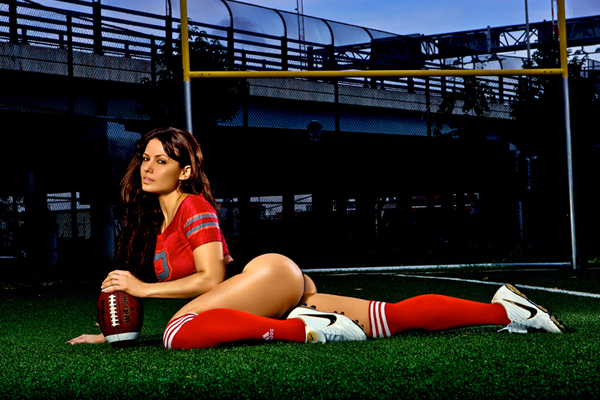
Image from hustlebunny.com

Thursday, March 22, 2012

Pole, where is thy audience?


I sang a Brahms Requiem this past weekend, and the best part (the fast, firey part) shouts at its center, "Tod, wo ist dein Stachel?" "Death, where is thy sting?"

Maybe it's just these words floating around in my head that make me ask: "Pole, where is thy audience?"

Pole is a tiny, tiny, tiny community. I've been a part of many discourse groups over my lifetime, and some of them are pretty compact. Circus is pretty intimate, and pole is, in the grand scheme of things, microscopic.

And yet our industry, on the surface, appears to be thriving. Pole studios are springing up worldwide, organizations are forming and formalizing, publications are found on newsstands, and enough people are now aware of pole fitness as an activity separate from exotic dance that most of us can say what we do and raise interest, not eyebrows. We have been here long enough, and have experienced enough growth both as an industry and as an art form, that we have proven ourselves to be Not A Fad.

Underneath the surface? Things continue to improve, but there are still some fundamental difficulties that we have yet to overcome. World-class polers that leave us starstruck are almost entirely unknown beyond our ranks. (My non-aerial Facebook friends will occasionally post a YouTube video of Jenyne Butterfly or Felix Cane, but without any recognition for the person behind the "wow pole dancing is hard" act.) Respected competitions are often held in dingy hotel conference halls, rather than in theaters and arenas. And most instructors are lucky if they break even on their pole investments. Even the best of the best earn most of their income traveling around teaching workshops, even if their teaching is not up to par with their breathtaking performances.

Clearly this lack of profitability just goes to show how truly we love our art. But does it have to be this way?

I am a classical singer. I sing in operas and concerts and churches. Most of my non-poling friends are also opera singers. We like to go to the opera sometimes. We might participate in or watch the occasional masterclass. We buy CD's and videos, especially featuring roles we hope to learn and idols we hope to emulate.

But we are not the audience.

The audience is opera buffs, theater lovers, patrons of the arts, cultured members of society, music fans. We opera singers and other professional musicians, we might be in the audience. But we are not its backbone.

Opera is widely known as the most expensive art form to produce. You have a full-fledged live theater production, a full-sized professional orchestra, a full-sized adult (and maybe also children's) chorus, possibly a troupe of professional dancers, and very, very, very specialized soloists, and all their understudies, because the tiniest cold or allergy attack can knock a singer out of the production. All these elements come together to rehearse for (hopefully) months, to produce a spectacle that will only be performed a handful of times.

Can you imagine if the only audience was only other opera singers? Where would the money come from? We are starving artists! Who would fill the thousand-seat opera houses? We are busy, we have rehearsals for our own productions!

Think of the worldwide popularity of soccer (or football, if you want to pretend you don't know what "soccer" means). Arenas are filled. Fans are screaming. People are killing each other over team rivalries, for christ's sake! I mean, I'm not saying that's good, but what I am saying is: what if the only people who watched soccer were other soccer players? Gone are the fans. Gone are the arenas. Gone is the swelling of national pride.

Gone is the money. Gone is the organization. Gone is the funding for athletics-centered research.  Gone are the careers of everyone in the industry, and the perfection that comes with being able to focus on what you love full-time, instead of as a hobby.

Who goes to pole conferences, competitions, and performances? Other polers. Maybe friends and spouses of the performers, but mostly, it's us. The teachers, and more enthusiastic students (and self-teachers), of pole fitness.

Why is that?

Well, one reason is that we are a good client base. Pole is a relatively expensive hobby, and people who go into it tend to have enough expendable income to attend workshops and buy products. We are an extremely supportive and enthusiastic audience, and a practitioner of an art can always appreciate minutiae of a performance that escapes the layperson. Polers like watching polers, and polers like polers to be in the audience.

But if we remain this insular, we have little room to grow. We are like an isolationist nation which has nowhere to turn when drought or famine strikes.

A more deeply-rooted cause of our seclusion is our increasingly distant but ever-undeniable relationship to the adult entertainment industry. That relationship might be something like second cousin twice removed, but we come from the same blood. This isn't a problem for us: most polers respect and admire strippers, and the strippers I know respect and admire fitness polers. But we, the pole community, tend to use our lack of public performance as a way to draw the line between poling and exotic dancing. (After all, not all exotic dancing involves nudity, so you can't just use the "I have clothes on" argument.) Oh, we're not "exotic dancing," we're just taking classes. Oh, she's not a stripper, she does pole competitions. In fact, some amateur polers defend their hobby with the explanation, "I don't perform in public or anything."

The biggest hurdle is behind us. We've gotten the public to understand that pole fitness is not stripping. It took years, but the message finally got (mostly) through. If we can do that, we can make them understand that pole performance doesn't have to mean exotic dancing, either. It's another genre, in another venue. A singer singing in a classical style in a heavy costume in an opera house is an opera singer. A singer singing in a dark nightclub in front of a rhythm section with upright bass, using a modern, belty and improvisational singing style in a slinky gown, is a jazz singer. They're both singing in public, but you're not going to confuse the two.

Finally, maybe the reason we have no audience is because we haven't invited them. While we appreciate stumbling across pole stories in the media, we aren't out there creating our own headlines. Without outreach like televised pole competitions, running shows in theaters to advertise, and our stars being interviewed on The Daily Show, we have no public presence. Pole is strikingly visual, hauntingly beautiful. It seems odd that those visuals would be so unknown to the world.

Have you heard of the concept of an "echo chamber" in media? It's sort of like what the news networks do. They report on a story, and then report that everyone's reporting on it, and then they have to keep reporting on it because how can they ignore such a big story that everyone's talking about? This concept applies even more aptly to smaller discourse communities like our own. We bounce names, stories, products, incidents, moves off each other via forums, blogs, Facebook, and our newfound publications. These things then seem famous, because we're all talking about them. But it's just us talking to each other. Our voices don't permeate beyond the walls of our echo chamber.

In contrast, I learned more traditional aerial acrobatics alongside my pole education. Circus comes from the opposite perspective. People have been crowding circus tents for generations. When the circus came to our grandparents' towns, it was like Christmas. Today, Cirque du Soleil generates over 800 million dollars every year. How much must they make in merchandise alone? They are just one of many cirque nouveau companies producing shows to rave reviews. And they took what could have been considered a dying, outdated art form--circus--and brought joy to millions. Joy and jobs.

We have so much to offer. Our art is ripe for public picking. We have jaw-dropping, death-defying, scandalously sexy, achingly beautiful, human art. A light that we hide under a bushel. I guess I'm ending this post the same way I began it, with a Bible verse. (Ironically, I am not Christian.) I always liked the way this verse was paraphrased in Godspell: "But if that light's under a bushel, it's lost somethin' kinda crucial!"

So let your light so shine before men.

What do you think? Do you prefer the intimacy of our community, or would you prefer a wider audience for what we do?

Image taken from http://dashes.com/anil/2010/02/the-power-of-the-audience.html